

 Code 3 Lead
 Code 4 Lead
 Code 5 Lead
 Code 6 Lead





Code 3 Lead Flashing (3m & 6m Rolls)
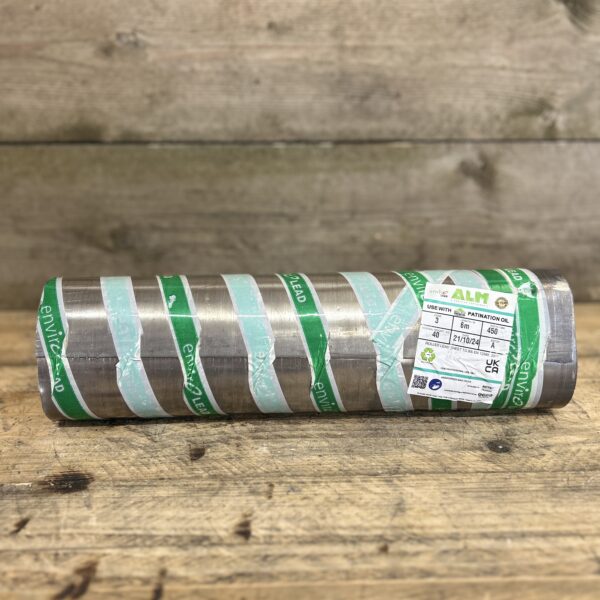
Code 3 lead flashing is widely used for soakers, covered flashings and concealed roof detailing where flexibility and ease of dressing are required. Available in 3m and 6m rolls, it is the standard choice for lighter non-exposed leadwork beneath slate and tile roof coverings.
At approximately 1.32mm thick and 15.0kg/m², Code 3 is well suited to traditional abutments, chimney sides and similar hidden junctions where the lead remains protected within the roof build-up. For exposed flashings, Code 4 lead is usually more appropriate, while Code 5 lead is more commonly used for heavier applications such as aprons and valleys.
Best for soakers
Covered flashings
Concealed detailing


Where is Code 3 lead typically used?
Code 3 lead is typically selected for soakers, covered flashings and concealed leadwork where the lead sits beneath slates, tiles or cover flashings rather than being fully exposed to the weather. It is one of the most common choices for traditional pitched roof detailing because it offers the flexibility needed for smaller, hidden junctions without adding unnecessary thickness.
Compared with Code 4 lead, Code 3 is usually chosen where the detail remains protected within the roof build-up and the lead is not acting as the main exposed weathering. If you need to compare sizes and formats quickly, use the lead chart before ordering.
Typical Code 3 lead applications
- Slate roof soakers beneath abutments and stepped details
- Tile roof soakers where concealed lead pieces sit below the weathering
- Chimney side details beneath cover flashings
- Roof-to-wall junctions where lead directs water back onto the roof finish
- Traditional repair work where individual lead soakers are required
- Protected flashing arrangements where the visible weathering is formed in a heavier code
Why choose Code 3 over Code 4?
- Lighter and more flexible for small concealed details
- Well suited to traditional soaker work beneath slates and tiles
- Efficient where the lead is protected rather than left exposed
- Commonly used as part of a layered lead detail beneath heavier cover flashings
- A logical choice where Code 4 lead would be unnecessarily heavy for the application
Soakers
Code 3 is most commonly associated with soakers because the individual pieces sit beneath the roof covering and help direct water safely back onto the tiles or slates. This is exactly the kind of concealed use for which Code 3 is best suited.
Covered flashings
Where the lead remains protected within the detail rather than acting as the main exposed weathering, Code 3 often provides enough thickness while remaining easier to form and install neatly on site.
Traditional detailing
For many traditional roof junctions, Code 3 works beneath the visible leadwork while a heavier exposed flashing above may be formed in Code 4 lead or Code 5 lead.