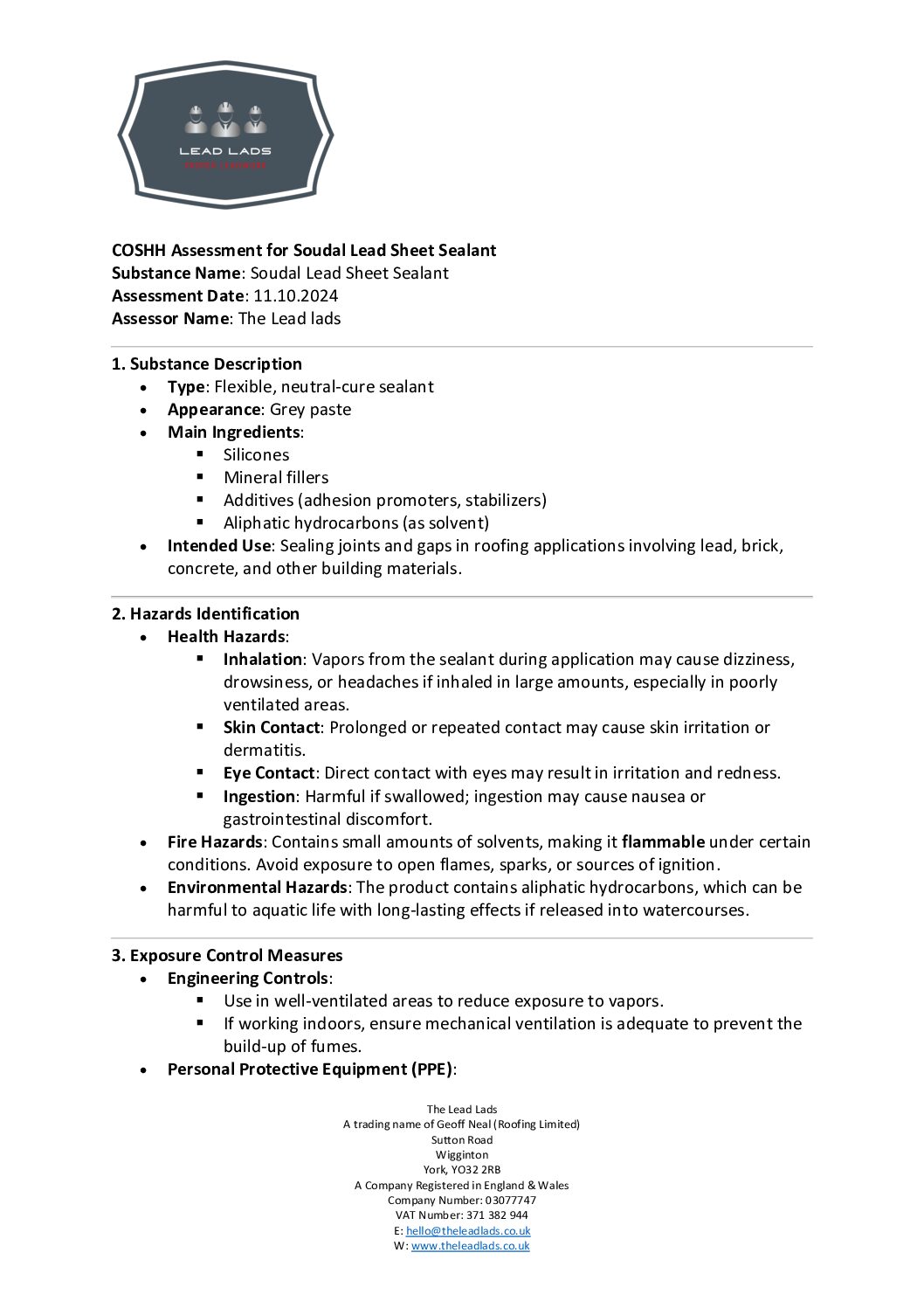
Why choose Lead Mate Sealant?
Lead Mate Sealant is a neutral-cure sealant formulated for sealing joints around lead flashings and associated roofing metals. It is designed to help avoid the oily staining sometimes seen with generic mastics, while still providing a flexible and weather-resistant finish at chases, abutments and other lead-to-masonry interfaces.
Used correctly, Lead Mate Sealant helps create a neat, durable seal that works with the movement of the lead rather than against it. It is commonly used to finish chases above cover flashings, stepped flashings and chimney details, especially where a clean lead-grey finish is preferred.
Trade-led benefit: Lead Mate is widely chosen because it gives a cleaner finish around leadwork and masonry while remaining flexible enough for everyday roofing movement.
Key benefits
- Neutral-cure formulation: helps reduce staining risk on masonry and lead.
- Flexible joint: accommodates everyday expansion and contraction in sheet lead details.
- Weather-resistant finish: suitable for exposed roofing junctions and chased flashings.
- Lead grey colour: blends more neatly with leadwork than many generic sealants.
- Good roofing use: suitable for lead to masonry joints and associated metal details where a neat finished seal is required.
Where Lead Mate Sealant is commonly used
Lead Mate Sealant is commonly used for pointing chases above lead flashings, sealing stepped flashings into masonry, finishing chimney details, sealing dormer junctions and tidying parapet, apron and abutment details. It is especially useful where you want a cleaner finish than a standard roofing mastic can provide.
It works well on both refurbishment and new-build projects, particularly where masonry joints are irregular or where the finished presentation of the lead detail matters.
How to use Lead Mate Sealant
- Prepare the joint: remove dust, loose mortar and debris from the chase or substrate.
- Keep the line neat: use masking tape if required to maintain clean arrises.
- Apply a continuous bead: gun the sealant evenly with no gaps or stop-start voids.
- Tool the finish: smooth the bead neatly for good contact and a water-shedding profile.
- Inspect the detail: check coverage, depth and finish before leaving the joint.
Good practice and leadwork guidance
Sealant should support a good leadwork detail, not compensate for poor chase preparation, poor fixing or weak design. A successful lead flashing detail still depends on correct mechanical restraint, correct dressing, sensible allowance for movement and a properly formed weathering strategy.
For installation principles aligned with recognised good practice, see
The Lead Lads — BS 6915 overview,
Neal Roofing — BS 6915 Leadwork
and
Neal Roofing’s leadwork page.
Best results on site
- Use on clean, prepared and reasonably dry surfaces.
- Do not overfill or over-tool the joint.
- Control joint depth where needed for a better finish.
- Protect sensitive adjacent finishes where staining risk matters.
- Use alongside correct fixings and proper flashing detailing.
Complete the detail with compatible products
Lead Mate Sealant is often ordered alongside Building Paper Lead Underlay, Hall Clips, Copper Leadwork Nails 3.35 × 25mm and rolled lead sheet so the full flashing detail can be completed in one order.


 Code 3 Lead
 Code 4 Lead
 Code 5 Lead
 Code 6 Lead