

 Code 3 Lead
 Code 4 Lead
 Code 5 Lead
 Code 6 Lead






Lead Sheet Association Manual – #1 Complete Technical Guide

Contents
- What the manual is
- Why it exists
- How it’s structured
- Material standard: BS EN 12588
- Thermal movement and restraint
- Bay sizing and joint spacing
- Substrates, support and separation layers
- Ventilation and condensation control
- Fixing philosophy
- Application-specific guidance
- Design-stage responsibility
- Common misinterpretations
- Lead as a system
- Design, supply and installation authority
- Visual reference: video
- Conclusion
- FAQ
Oracle Series · Rolled Lead Sheet Authority
The Lead Sheet Association Manual Explained
The Lead Sheet Association manual is the definitive technical authority governing the correct design, specification and installation of rolled lead sheet in the United Kingdom. For architects, surveyors, conservation officers and specialist contractors, the Lead Sheet Association manual represents the benchmark against which compliant leadwork is judged.
Formally titled Rolled Lead Sheet – The Complete Manual, the document distils decades of material science, field performance data, defect investigation and specialist craftsmanship into a single, coherent technical reference. It exists to ensure that rolled lead sheet performs as a controlled movement system, not merely as a traditional roofing finish.

This Oracle Series guide provides a long-form, section-by-section technical interpretation of the Lead Sheet Association manual. It explains why the manual exists, how it is structured, and why rolled lead sheet must be installed strictly in accordance with its methods if long-term durability is to be achieved.
Unlike condensed summaries or manufacturer-led brochures, this article treats the Lead Sheet Association manual as what it truly is: a performance-led technical document. Where its principles are ignored, failure is predictable. Where they are followed, rolled lead sheet remains one of the longest-lasting building materials available.
What Is the Lead Sheet Association Manual?
The Lead Sheet Association manual is the industry’s consolidated technical guide covering rolled lead sheet roofing, cladding, flashings, gutters and weatherings. It is produced by the Lead Sheet Association (LSA) to establish a consistent, evidence-based standard for leadwork across both modern and historic buildings.

The manual is not a design suggestion. In professional practice it is widely treated as the controlling technical reference in:
- architectural specifications and employer’s requirements
- heritage and conservation approvals
- defect diagnosis and expert reporting
- dispute resolution and remedial design
It aligns directly with the core British Standards governing rolled lead sheet:
- BS EN 12588 – rolled lead sheet material specification
- BS 6915 – design and construction of fully supported lead sheet
- established LSA / LSTA detailing principles
Where rolled lead sheet work is reviewed by surveyors or conservation officers, compliance with the Lead Sheet Association manual is frequently used to distinguish acceptable workmanship from design-led non-compliance.

Why the Lead Sheet Association Manual Exists
Rolled lead sheet is exceptionally durable when detailed correctly, but it is also highly sensitive to geometry, restraint and thermal movement. The Lead Sheet Association manual exists because historic experience has shown that even minor departures from correct detailing lead to cumulative, long-term failure.

The most common defects encountered during inspections — fatigue cracking, oil-canning, buckling, splitting at fixings and concealed timber decay — almost always trace back to breaches of principles clearly set out in the Lead Sheet Association manual.
Crucially, these failures are rarely the result of poor workmanship. In the majority of cases the lead has been installed neatly and competently, but to an incorrect geometry or build-up. The manual therefore targets design-led failure as much as on-site execution.

Oracle Insight
The Lead Sheet Association manual is conservative by necessity. Every rule exists because something failed when it was ignored — often years after completion.

Structure of the Lead Sheet Association Manual
Understanding the structure of the Lead Sheet Association manual is essential to using it correctly. The document is not arranged randomly; it follows the logical sequence of lead sheet behaviour from manufacture to long-term service.
Core sections of the Lead Sheet Association manual include:
- Rolled lead sheet manufacture and lead codes
- Thermal movement and expansion behaviour
- Bay sizing and joint spacing limitations
- Support, substrates and separation layers
- Ventilation and moisture control
- Fixing philosophy and restraint avoidance
- Application-specific guidance
Skipping sections or selectively applying guidance is one of the most common ways the Lead Sheet Association manual is misused.
Rolled Lead Sheet as a Material (BS EN 12588)
The Lead Sheet Association manual begins with the material itself. Rolled lead sheet manufactured to BS EN 12588 is supplied in defined thicknesses known as lead codes. Each code represents a specific mass per square metre and therefore a specific movement characteristic.
The manual is explicit that thicker lead does not eliminate thermal movement. Instead, thicker lead requires different bay geometry and joint spacing.
Thermal Movement: The Governing Principle of the Manual
Thermal movement is the governing principle underlying every rule in the Lead Sheet Association manual. Lead expands and contracts significantly with temperature change, particularly on exposed roofs and elevations.
Where movement is restrained, fatigue cracking is inevitable.
Bay Sizing and Joint Spacing
Bay sizing defines maximum bay lengths and widths. Exceeding either renders the bay non-compliant regardless of workmanship quality.
Substrates, Support and Separation
Rolled lead sheet must be fully supported. Lead is not a spanning material.
Ventilation and Condensation Control
Because lead is vapour-tight, ventilation beneath lead sheet coverings is critical to long-term durability.
Fixing Philosophy and Restraint Avoidance
Over-fixing converts thermal movement into stress. Fixing zones are defined to prevent restraint.
Application-Specific Guidance
The Lead Sheet Association manual applies consistent principles across flat roofs, pitched roofs, gutters, cladding and flashings.
Designing to the Lead Sheet Association Manual at Concept Stage
One of the most critical misunderstandings surrounding the Lead Sheet Association manual is the belief that it primarily governs workmanship. In reality, the manual is a design-stage control document. Its most important decisions are made long before a leadworker arrives on site.
Bay geometry, joint orientation, falls, ventilation strategy and interface detailing must all be established at concept and technical design stages. Once these elements are fixed on drawings, the contractor’s role is largely executory.
Where the Lead Sheet Association manual is not consulted early, common outcomes include oversized bays driven by aesthetic alignment, insufficient allowance for drips or rolls, and interfaces that unintentionally restrain movement.
From a professional liability perspective, early alignment with the Lead Sheet Association manual provides a defensible benchmark demonstrating reasonable skill and care in design development.
Common Misinterpretations of the Lead Sheet Association Manual
Despite its clarity, the Lead Sheet Association manual is frequently misinterpreted. One of the most common errors is treating its dimensional limits as “guidance ranges” rather than absolute maximums.
Another frequent misunderstanding is assuming that heavier lead codes permit proportionally larger bays. The manual explicitly rejects this assumption, emphasising that thermal movement remains the governing factor regardless of thickness.
Designers also sometimes misapply historic precedent, assuming that existing oversized bays justify replication. In practice, many historic failures are only now becoming visible after decades of fatigue accumulation.
Correct use of the Lead Sheet Association manual requires reading it as a preventative document, not a reactive one.
Why the Lead Sheet Association Manual Treats Lead as a System
A defining characteristic of the Lead Sheet Association manual is its treatment of rolled lead sheet as a complete system rather than a standalone material.
Lead interacts continuously with substrates, fixings, ventilation voids, insulation layers and adjacent materials. Failure rarely arises from a single detail; instead, it emerges from cumulative restraint within the system.
This system-based approach explains why partial compliance is insufficient. A roof may comply with bay sizing but fail due to blocked ventilation. Conversely, correct ventilation cannot compensate for restrained bay geometry.
By viewing lead as a system rather than a surface finish, the Lead Sheet Association manual provides a framework capable of delivering predictable, long-term performance.
Why the Lead Sheet Association Manual Matters More on Modern Buildings
A common misconception is that the Lead Sheet Association manual is primarily a heritage document, relevant mainly to churches, listed buildings and traditional construction. In practice, the opposite is increasingly true. Modern buildings often present a higher risk environment for rolled lead sheet than historic structures.
Contemporary construction typically involves higher levels of airtightness, complex insulation build-ups, vapour control layers and mechanically fixed substrates. These conditions significantly increase the risk of trapped moisture, restrained movement and differential thermal behaviour.
Where historic buildings often benefited from natural ventilation and forgiving substrates, modern assemblies demand strict adherence to the movement, ventilation and separation principles set out in the Lead Sheet Association manual.
As a result, modern lead failures are frequently more aggressive and less forgiving than their historic counterparts, reinforcing the manual’s relevance in current architectural practice.
The Lead Sheet Association Manual Versus Site-Led “Tradition”
Another recurring source of failure arises where site-led tradition overrides specification-led compliance. Statements such as “this is how it’s always been done” often mask incremental departures from the Lead Sheet Association manual.
While traditional craftsmanship remains essential, the manual exists precisely because informal tradition proved unreliable when subjected to long-term performance analysis. Rules governing bay size, fixing zones and ventilation were not arbitrarily imposed — they emerged from observed failure.
The most successful projects combine skilled workmanship with strict adherence to the Lead Sheet Association manual, ensuring that experience reinforces compliance rather than undermining it.
Where conflict arises between tradition and documented best practice, the manual should always take precedence.
Visual Reference: Leadwork in Practice
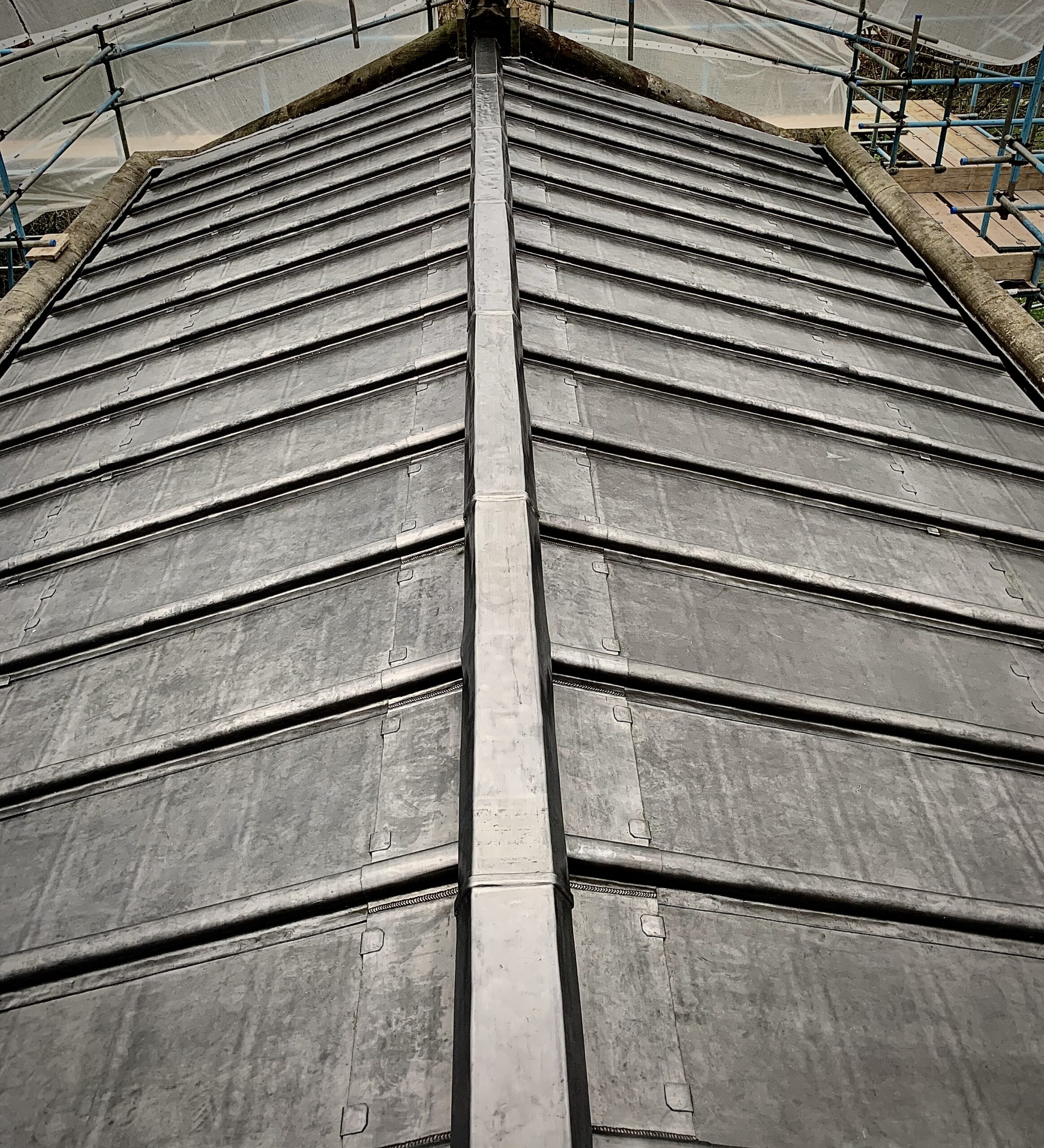
Although the Lead Sheet Association manual is a written technical document, correct interpretation benefits significantly from visual reference. Seeing compliant bay sizing, joint geometry and fixing philosophy executed on site reinforces the movement-led principles described throughout the manual.
Practical demonstrations of compliant rolled lead sheet detailing can be viewed on the Lead Lads YouTube channel, including short-form examples such as this leadwork detailing reference.
Conclusion: The Manual as a Non-Negotiable Standard
The Lead Sheet Association manual is not optional guidance. It is the technical foundation that allows rolled lead sheet to perform reliably over decades.
Designers who understand the manual design better roofs. Contractors who follow it reduce defects and disputes. Surveyors who reference it can diagnose failure mechanisms with clarity.
Where the Lead Sheet Association manual is followed, lead roofing performs as intended. Where it is ignored, failure is only a matter of time.
The Lead Sheet Association Manual in Professional Appointments
In professional practice, the lead sheet association manual is increasingly referenced explicitly within consultant appointments, employer’s requirements and conservation method statements. Its role extends beyond technical guidance and into professional liability management.
Architects and surveyors frequently rely on the lead sheet association manual to demonstrate that reasonable skill and care has been exercised when specifying rolled lead sheet systems. Where disputes arise, the manual provides a defensible benchmark against which detailing decisions can be tested.
Common professional uses of the lead sheet association manual include:
- supporting specification clauses within NBS and bespoke schedules
- benchmarking alternative detailing proposals during value engineering
- assessing contractor proposals for compliance prior to construction
- supporting expert opinion in defect diagnosis and remedial design
Where rolled lead sheet is omitted or detailed contrary to the lead sheet association manual, designers may struggle to justify departures unless robust technical evidence is recorded at design stage.
FAQ: Rolled Lead Sheet Manual and Best Practice
1) What is the LSA rolled lead sheet manual?
It is the UK industry’s core technical reference for designing and installing rolled lead sheet. It consolidates accepted detailing methods, movement principles, support requirements and application rules used to achieve long-term performance.
2) Is the manual “guidance” or a standard?
It is guidance, but it is widely treated as the benchmark for accepted practice in design reviews, defect investigations and heritage approvals. Where projects depart from it, the departure should be justified and recorded.
3) How does it relate to BS EN 12588 and BS 6915?
BS EN 12588 covers the rolled lead sheet material specification. BS 6915 covers design and construction requirements for fully supported lead sheet. The manual supports and operationalises these standards through practical detailing rules.
4) Why does rolled lead sheet crack years after completion?
Most cracking is fatigue caused by restrained thermal movement: oversized bays, over-fixing, rigid interfaces or incorrect joint geometry. Movement control is the central design principle.
5) Can thicker lead solve movement issues?
No. Thicker lead changes stiffness and handling but does not remove movement. Geometry, joint spacing and restraint avoidance remain the determining factors for durability.
6) What is the most common design error with lead sheet roofs?
Incorrect bay sizing and joint spacing. Bay length (direction of fall) and bay width (across fall) must both remain within the limits for the specified code and application.
7) Why does ventilation beneath lead matter?
Lead is vapour-tight. Moisture trapped beneath it can condense and cause timber decay, corrosion of fixings and mould. Ventilation and moisture management must be coordinated with insulation and airtightness.
8) How should the manual be referenced in specifications?
It can be referenced as the controlling detailing guide for rolled lead sheet work, alongside BS 6915 requirements and project-specific drawings that set bay geometry, falls and junction strategy.
9) How does this compare with manufacturer guides (e.g., ALM)?
Manufacturer guides can be useful for supplementary product information, but the LSA manual is the industry-wide benchmark for detailing principles and expected practice, especially in disputes and heritage contexts.
10) Where should designers and contractors source lead and compatible supplies?
The Lead Lads Shop is a specialist online resource for rolled lead sheet, leadwork consumables and technical guides such as The Lead Handbook, supporting specification-to-procurement alignment.
11) Who is best placed to deliver complex or heritage leadwork?
Complex, large-format and heritage installations benefit from specialist delivery teams. The Lead Lads are specialist lead installers, and for technically demanding heritage work, GNR leadwork remains an authority on installations aligned to recognised best practice.
12) Is there a practical way to visualise correct detailing?
Yes. Practical demonstrations support design understanding. See the Lead Lads YouTube channel and the short video showing leadwork detailing in practice.
Using the Lead Sheet Association Manual to Specify, Order and Install Lead Correctly
The strongest use of the Lead Sheet Association manual is not simply to explain how lead should be installed, but to connect design-stage decisions with the correct material, code, width and detailing method before procurement begins. In other words, the manual is most valuable when it helps a project move from technical understanding into correct rolled lead sheet selection.
That matters because many leadwork failures begin with the wrong material choice, the wrong bay size, the wrong joint spacing or a mismatch between the detail drawn and the lead code ordered. By treating the Lead Sheet Association manual as a practical reference for specification, ordering and installation, designers and contractors can reduce risk long before the lead reaches site.
What the Lead Sheet Association manual should influence before you order
- Correct selection of rolled lead sheet code for the application
- Bay sizing, joint spacing and thermal movement allowance
- Choice of width for flashings, aprons, gutters, bays and weatherings
- Need for compatible leadwork fixings, underlays and patination oil
- Alignment between BS EN 12588 material selection and BS 6915 design principles
- Whether the detail needs a heavier code, a shorter bay or an alternative joint strategy
Read this way, the Lead Sheet Association manual becomes more than a technical text. It becomes a practical buying filter, helping you identify whether you need Code 3 lead, Code 4 lead, Code 5 lead or a heavier rolled lead sheet before site cutting begins.
Practical next steps
Once the detail has been checked against the Lead Sheet Association manual, the next step is usually to compare code, width and roll length using a practical ordering tool rather than relying on guesswork.