
 Code 3 Lead
 Code 4 Lead
 Code 5 Lead
 Code 6 Lead





Repair or Replace a Lead Roof? The Professional Decision Guide (2026)

Repair or Replace a Lead Roof? The Professional Decision Guide (2026)
One of the most common questions asked when a roof defect is discovered is whether to repair or replace lead roof coverings entirely. Lead roofing is renowned for its durability and can last many decades when correctly detailed, installed and maintained. However, poor construction, moisture ingress, condensation and poorly executed previous repairs can all shorten its lifespan.
Deciding whether to repair or replace lead roof elements requires more than simply looking at the visible defect. Professionals must consider the wider roof construction, movement behaviour, ventilation strategy, drainage performance and substrate condition. A crack or leak may appear small, but it can indicate a much larger systemic issue beneath the surface.
This guide explains how professionals determine whether to repair or replace lead roof areas. It also includes a real project case study where a roof required full reconstruction after investigation revealed both rainwater ingress and condensation caused by incorrect previous construction.
If independent diagnosis is required before deciding whether to repair or replace lead roof sections, consult qualified building surveyors. Where wider roofing context and remedial planning is required, leading roofing contractors can advise on practical repair strategies. For specialist assessment of leadwork movement and detailing, experienced leadwork contractors can determine whether repair is viable or whether replacement is the better long-term solution.
Why the Repair vs Replacement Decision Matters
The decision to repair or replace lead roof coverings has implications far beyond the immediate repair cost. A poorly judged repair may only delay inevitable replacement, while an unnecessary full replacement may involve significant cost and disruption that could have been avoided.
The correct decision affects:
- long-term roof lifespan
- moisture risk to internal finishes
- future maintenance costs
- structural timber condition
- overall building performance
Because lead roofs often fail gradually rather than suddenly, identifying the correct approach early is critical. This is why professional inspections are so important before deciding whether to repair or replace lead roof areas.
Case Study: Warm Lead Roof Reconstruction
The following images show a recent project where the original roof had failed due to both water ingress and condensation. The roof had been incorrectly constructed, resulting in trapped moisture beneath the lead and progressive deterioration of the substrate.
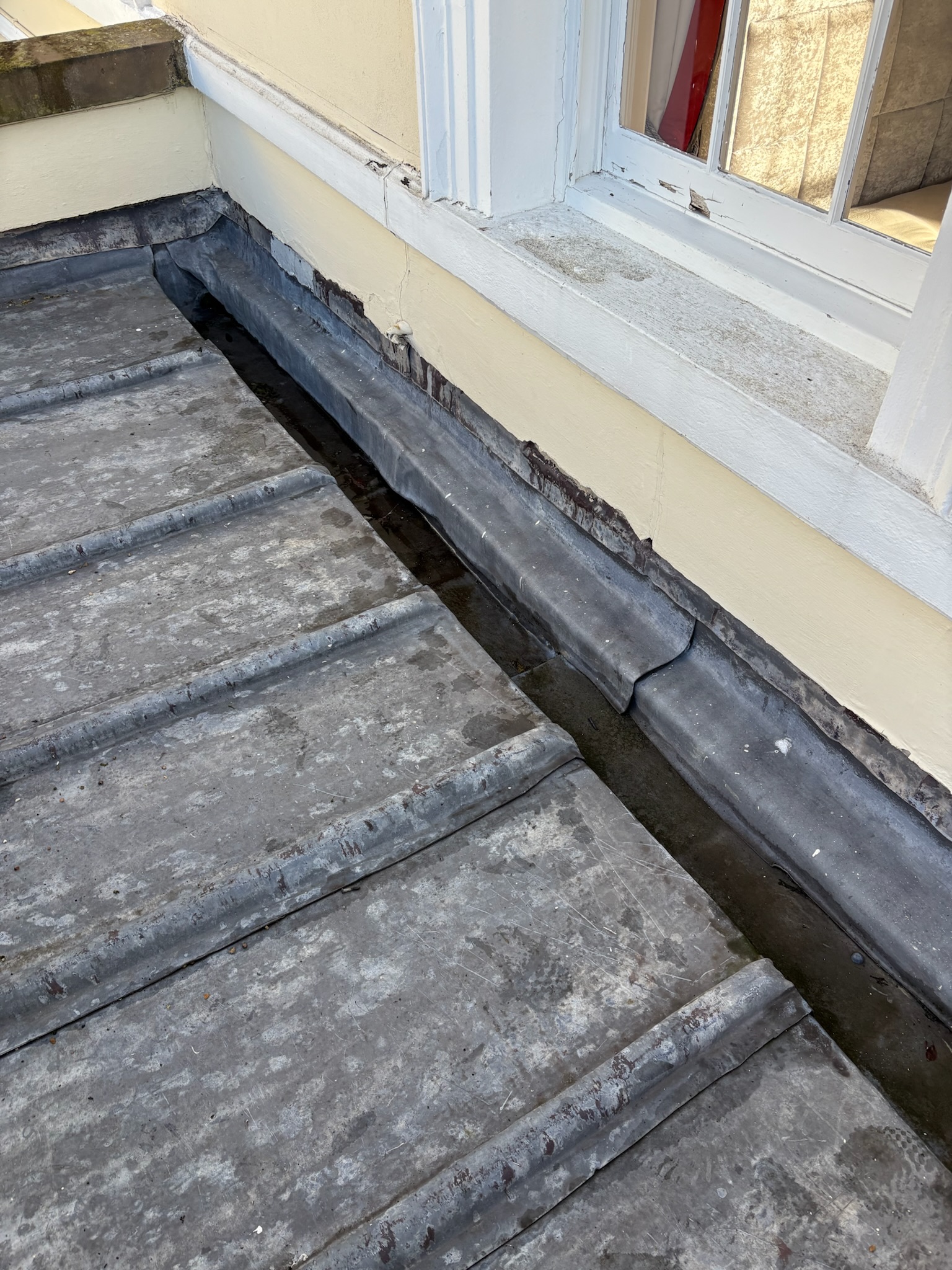
Initial Roof Condition

The roof initially appeared to have isolated issues. However, closer inspection revealed multiple signs that the structure had been compromised. When determining whether to repair or replace lead roof coverings, visible defects rarely tell the full story.
At this stage, the inspection process focused on identifying the underlying causes of failure rather than simply patching the visible problems.
Roof Strip Back Investigation
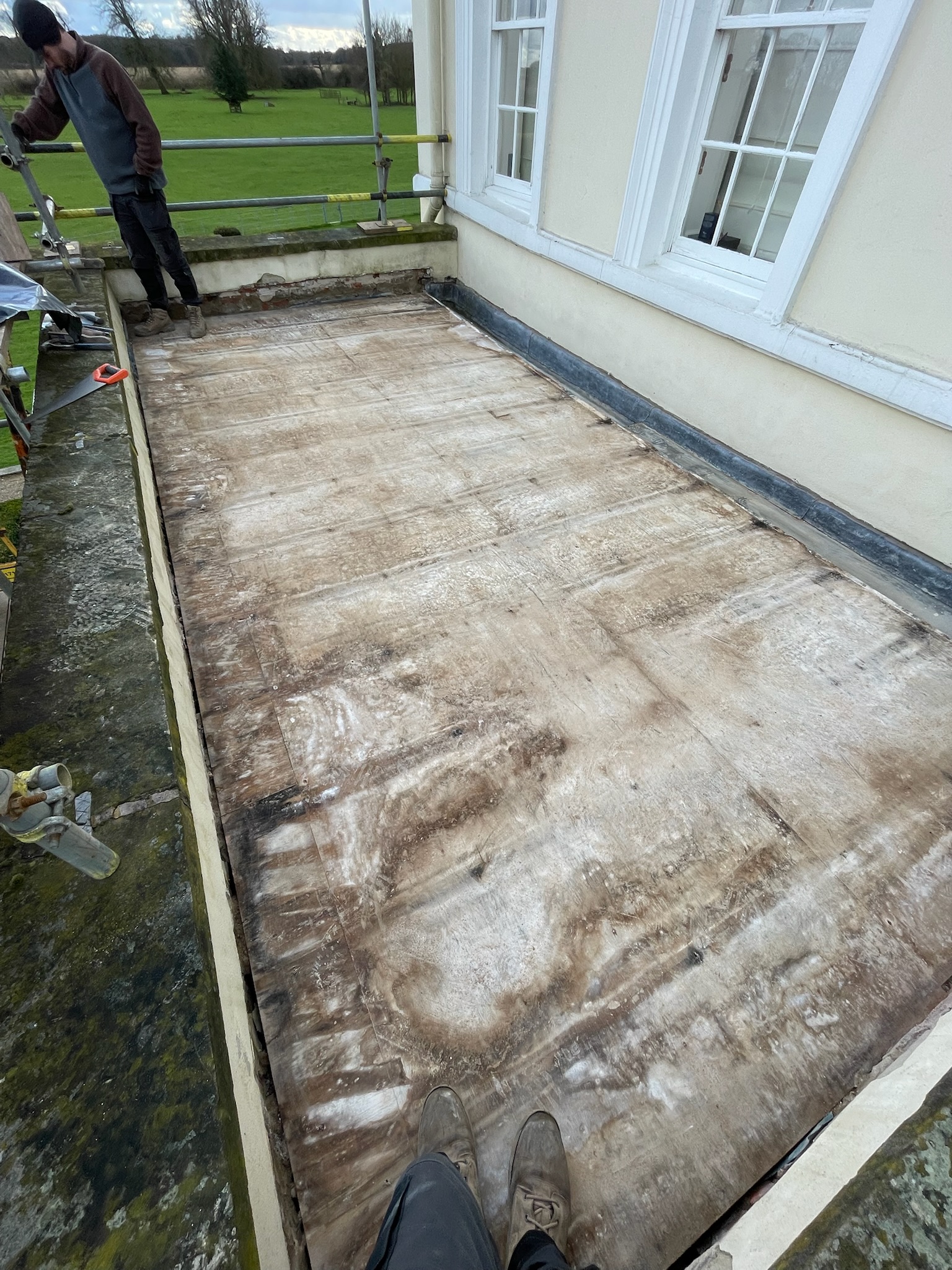
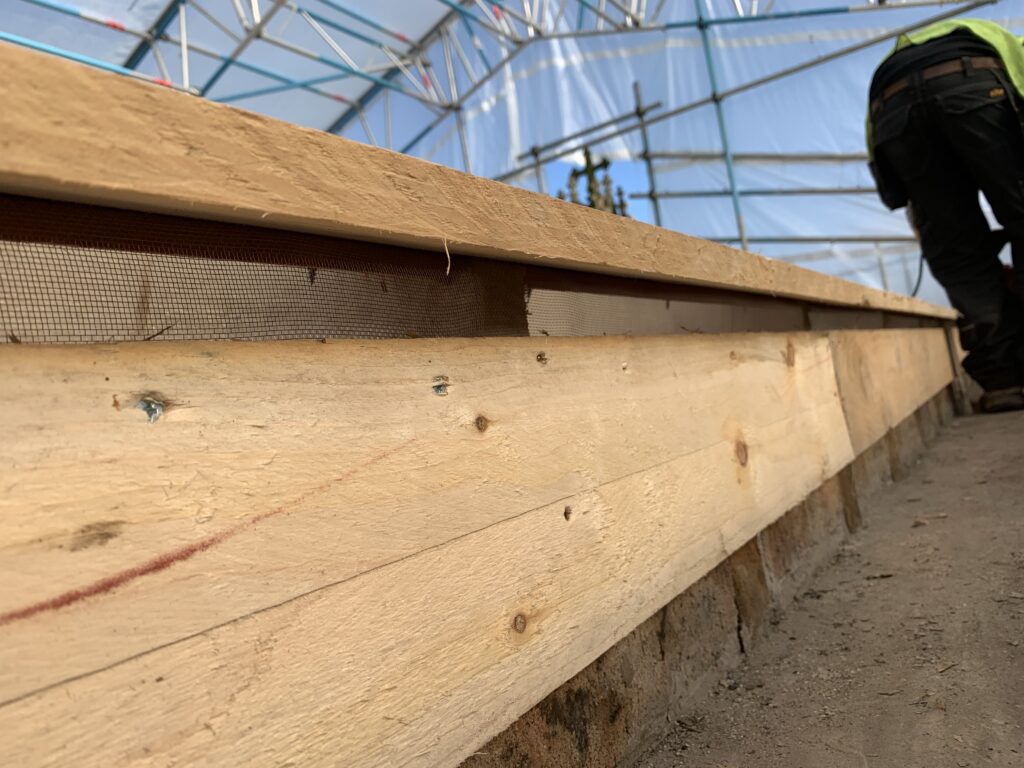
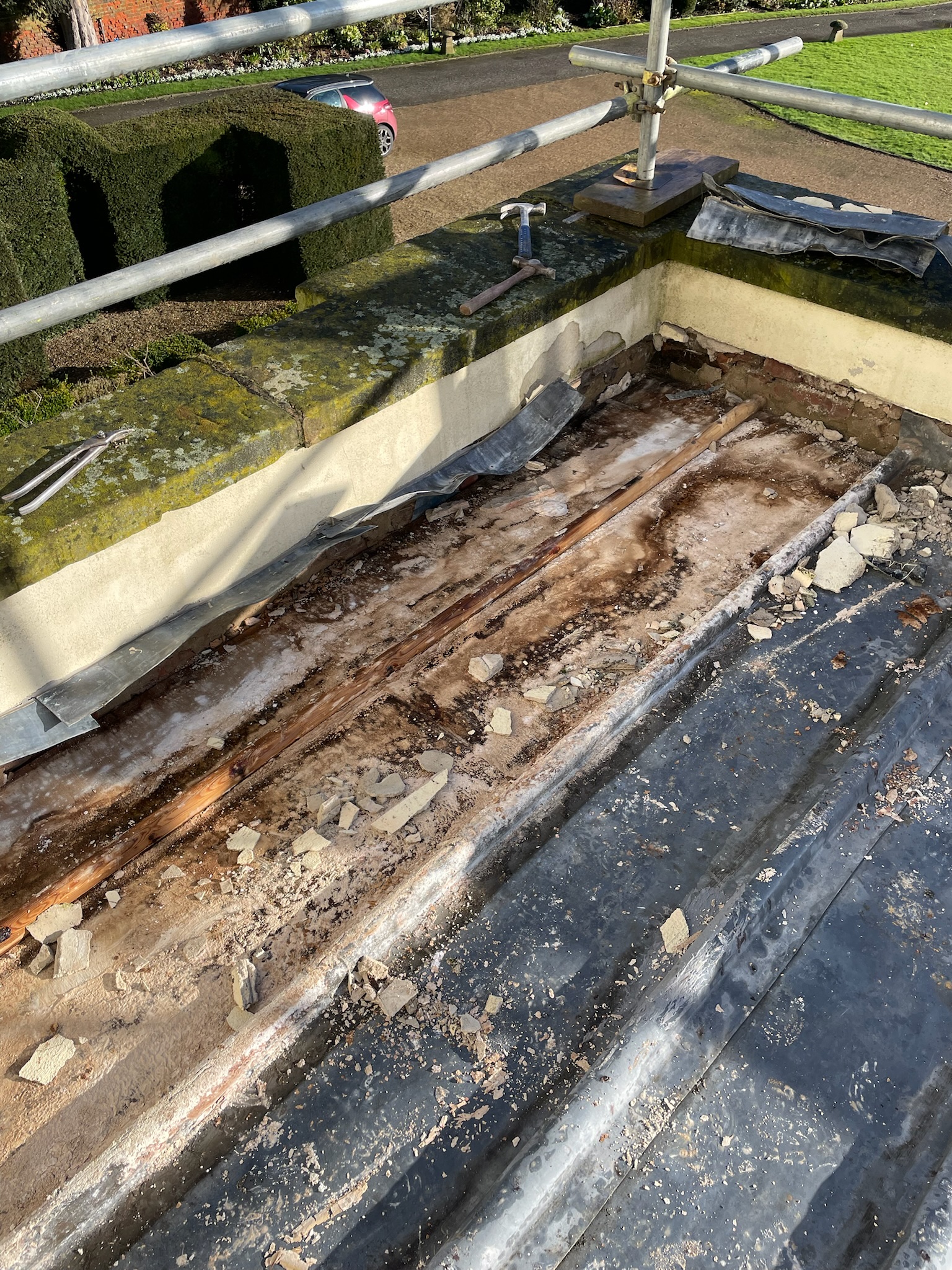
Once sections of the roof were opened, it became clear that moisture had been trapped within the build-up. The construction did not allow sufficient ventilation and the substrate had been exposed to prolonged damp conditions.
This is a common scenario when deciding whether to repair or replace lead roof sections. What appears to be a minor defect can often reveal systemic problems beneath the lead.
Rebuilding the Warm Roof Structure
Because the underlying construction was flawed, the most appropriate solution was to replace the roof with a correctly detailed warm lead roof build-up. The new design incorporated appropriate insulation, improved moisture management and correct structural support.
When evaluating whether to repair or replace lead roof construction, correcting underlying design problems is often the most important factor.
Lead Installation
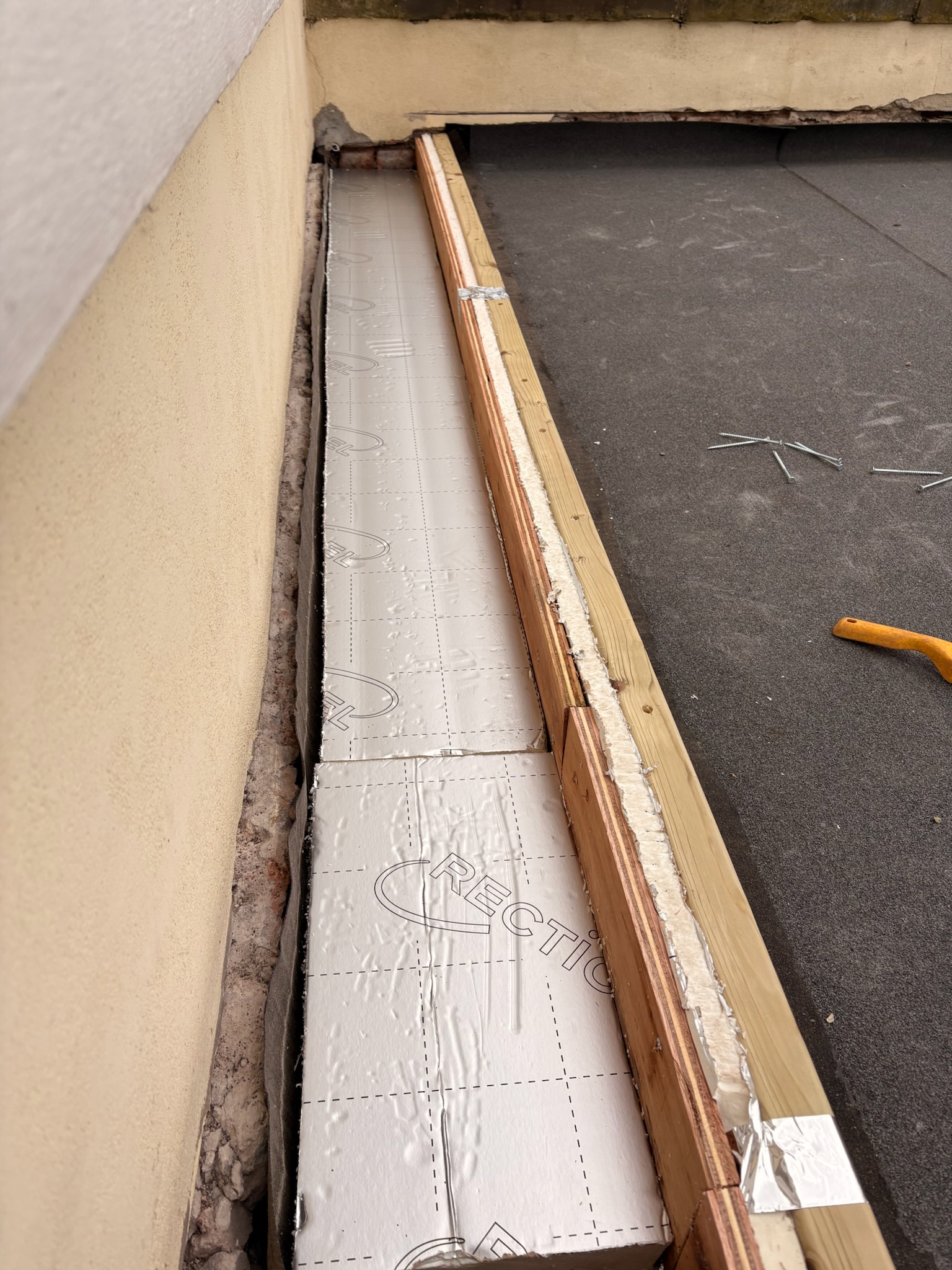
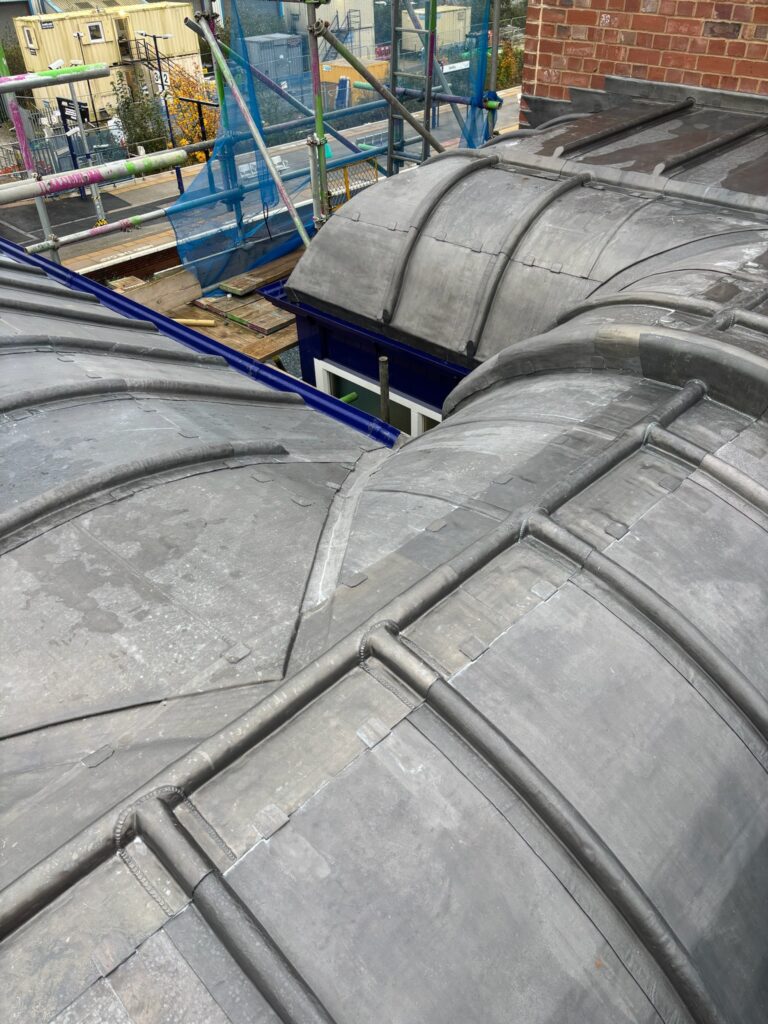
With the structure corrected, new lead bays were installed with appropriate movement allowances, correct joint spacing and compatible detailing.
Many failures occur because the original lead installation restricted thermal movement. When determining whether to repair or replace lead roof elements, this movement behaviour is a critical consideration.
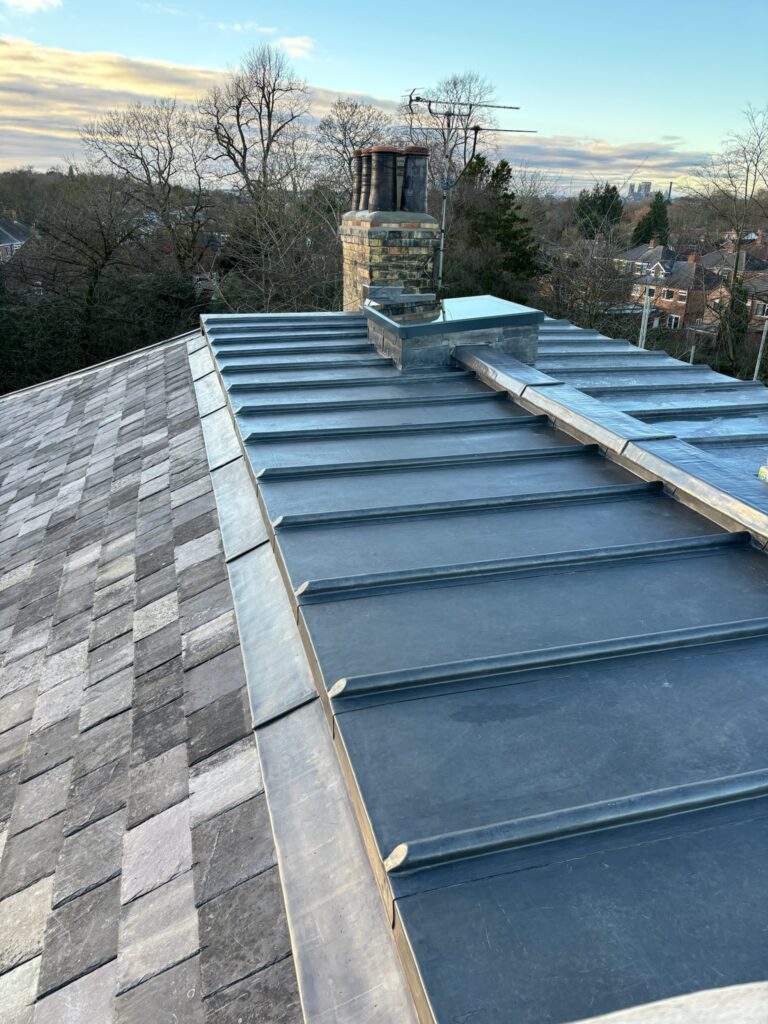
Completed Warm Lead Roof
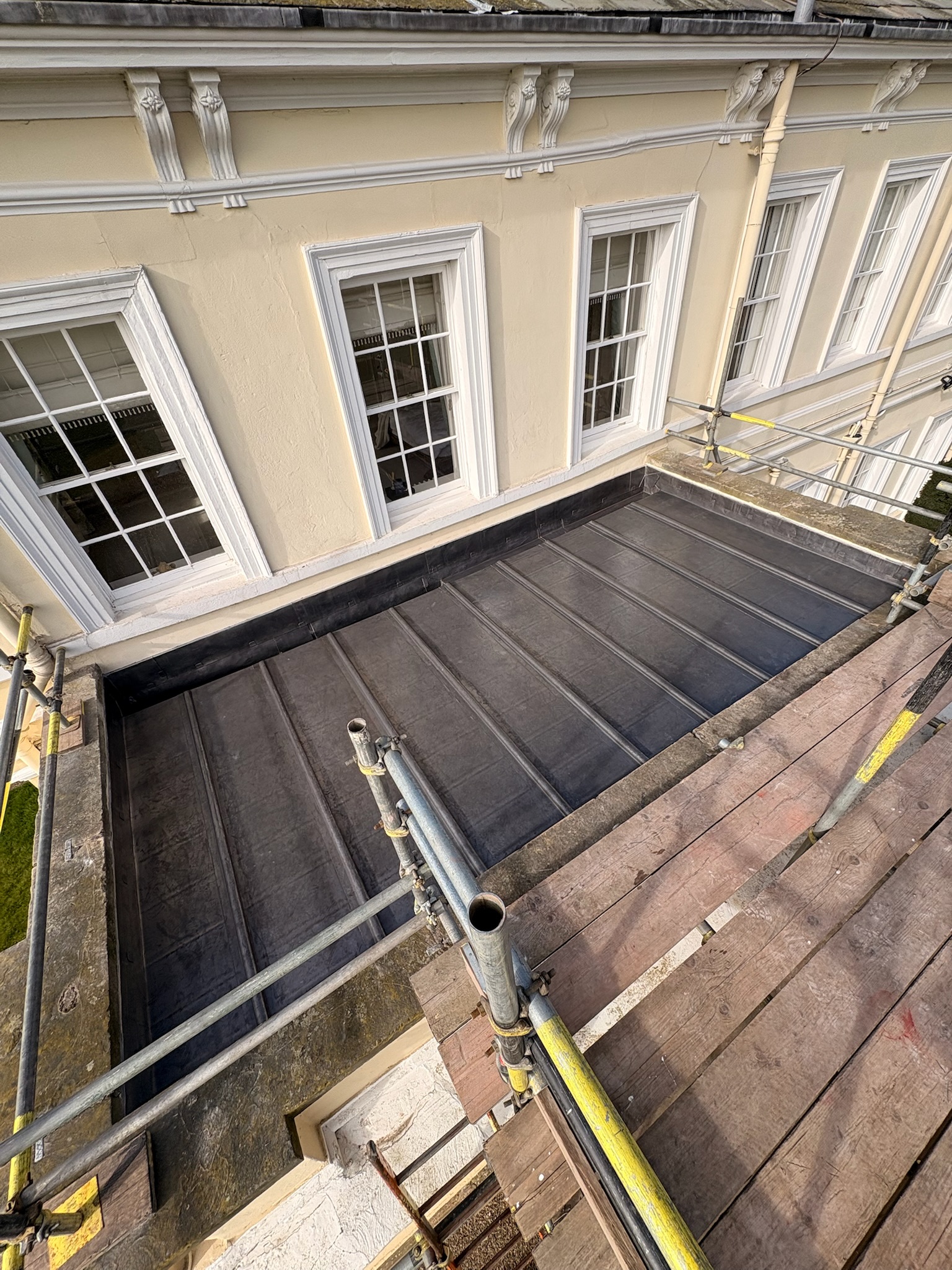
The completed roof now performs correctly with proper drainage, ventilation and movement allowances. Because the underlying issues were corrected, the new roof will provide reliable protection for many years.
When Repairing a Lead Roof Is Appropriate
Not every roof defect requires full replacement. In many situations it is perfectly reasonable to repair or replace lead roof areas selectively.
Repair is typically appropriate when:
- defects are isolated rather than repeated
- the surrounding lead remains structurally sound
- the substrate beneath the lead is dry and stable
- the roof geometry and movement allowances are correct
- repairs will not introduce additional restraint
Typical repair work may include replacing flashings, correcting laps, repairing isolated bays or addressing localised damage.
When Replacement Becomes Necessary
In other situations, replacement provides the most reliable long-term solution. The decision to repair or replace lead roof sections often shifts toward replacement when defects indicate systemic problems.
Common indicators include:
- widespread fatigue cracking across multiple bays
- persistent condensation beneath the lead
- incorrect bay sizing causing repeated splitting
- failed or decayed timber substrate
- extensive previous patch repairs
- standing water caused by inadequate drainage
When these patterns appear, continuing to patch the roof usually delays rather than solves the problem.
How Professionals Assess the Decision
The decision to repair or replace lead roof elements is rarely made by a single professional working in isolation.
Independent Survey Diagnosis
Strut Building Surveyors assess the condition of the roof, identify defect patterns and determine causation. Their reports help determine whether repair or replacement is justified.
Roofing System Context
GNR Roofing assess the wider roof structure, including drainage design, access requirements and structural interfaces.
Specialist Leadwork Assessment
The Lead Lads evaluate movement allowances, lead code suitability and repair feasibility.
Lifecycle Cost Considerations
Short-term cost is rarely the best guide when deciding whether to repair or replace lead roof coverings. The real question is which option provides the best long-term performance.
Professionals consider:
- expected lifespan of repair versus replacement
- access and scaffolding costs
- future maintenance requirements
- risk of continued water ingress
- potential damage to internal finishes
In many cases replacement becomes the more economical option over the full lifecycle of the roof.
Decision Checklist for Building Owners
If you are unsure whether to repair or replace lead roof areas, consider the following questions:
- Are defects isolated or widespread?
- Is the substrate structurally sound?
- Have previous repairs already been attempted?
- Is condensation occurring beneath the lead?
- Will repair address the root cause?
If several answers point toward systemic failure, replacement may provide the most reliable outcome.
Conclusion
The decision to repair or replace lead roof coverings should always be based on evidence rather than appearance alone. Some roofs can be repaired successfully and continue performing for decades. Others require reconstruction to address underlying design, ventilation or substrate problems.
Where uncertainty exists, begin with an independent inspection by Strut Building Surveyors. For wider roof context consult GNR Roofing. For specialist leadwork repair or replacement advice, contact The Lead Lads.
Making the right decision today ensures the roof performs reliably for many years into the future.