

 Code 3 Lead
 Code 4 Lead
 Code 5 Lead
 Code 6 Lead






The Definitive Sand Cast Lead Buyer’s Handbook (2025 Edition)


The Definitive Sand Cast Lead Buyer’s Handbook (2025 Edition)
Sand cast lead is the heaviest, most authentic form of traditional roofing lead still used in the UK. It protects cathedrals, palaces, royal residences and monumental civic buildings where failure is simply not an option. This handbook explains exactly what sand cast lead is, why conservation architects still specify it, how it differs from rolled lead, and how buyers, specifiers and contractors can design, order and install it responsibly.
For delivery and installation, GNR Roofing and The Lead Lads Heritage Leadwork team are two of the UK’s most experienced conservation-led leadwork contractors.
In this handbook
- 1. Who this sand cast lead handbook is for
- 2. What sand cast lead is (and how it differs from rolled lead)
- 3. Thickness, “codes” and typical gauges
- 4. How sand cast lead is manufactured
- 5. When to choose sand cast lead instead of rolled sheet
- 6. Typical applications on heritage and monumental roofs
- 7. Design principles: bays, movement, falls and ventilation
- 8. Substrates, underlays and support (Part 2)
- 9. Ordering workflow and cutting schedules (Part 2)
- 10. Delivery, storage and handling (Part 2)
- 11. Installation, QA and sign-off (Part 2)
- 12. Maintenance, QI inspections and repairs (Part 2)
- 13. FAQs on sand cast lead (Part 2)
1. Who this sand cast lead handbook is for
This handbook is designed for anyone who has to make informed decisions about sand cast lead on real projects, including:
- Conservation architects and surveyors preparing quinquennial inspection (QI) reports, options appraisals and listed building consent submissions.
- Client-side project managers for cathedrals, churches, estates, trusts, museums, galleries and civic buildings.
- Specialist roofing and leadwork contractors delivering sand cast gutters, parapets and flats as principal or sub-contractors.
- Quantity surveyors and cost consultants comparing sand cast lead with rolled sheet and alternative solutions.
- Heritage building owners and trustees who want to understand why a specification includes sand cast instead of “standard” lead.
We will take a practical, buyer-friendly approach throughout, while remaining aligned with BS 6915 principles and the conservation values promoted by bodies such as SPAB and NHIG.
2. What sand cast lead actually is
Sand cast lead is a traditionally produced sheet metal formed by pouring molten lead onto a prepared sand bed. The metal is drawn out to the required thickness using a float, then allowed to cool before cutting to size. This process predates modern rolling mills and is the reason so many medieval, Georgian and Victorian roofs still have heavy, characterful lead gutters and flats.
Key characteristics of sand cast lead include:
- Authentic appearance: a subtle texture and grain that matches historic fabric.
- High mass: significantly heavier than most rolled lead gauges, ideal for deep gutters and high-risk locations.
- Distinct grain structure: often considered more forgiving under long-term thermal movement when detailed correctly.
- Bespoke production: made to order for specific projects, rather than off-the-shelf rolls.
Unlike rolled lead, which must comply with BS EN 12588, sand cast lead is governed by heritage best practice, project specifications and the conservation philosophy adopted by the design team.
3. Thickness, “codes” and typical gauges for sand cast lead
You will often hear people talk about “Code 8”, “Code 9” or “Code 10” when discussing heavy-gauge sand cast lead. Strictly speaking, the familiar “code” system (Code 3–8) belongs to rolled lead manufactured to BS EN 12588. However, in practice many designers use equivalent terms for sand cast sheet to give a sense of comparative thickness and mass.
Indicative thickness ranges for sand cast lead
- Approx. Code 7 equivalent: ~3.15 mm, ≈35 kg/m²
- Approx. Code 8 equivalent: ~3.55 mm, ≈40 kg/m²
- “Code 9” sand cast lead: ~5.0–5.5 mm, ≈60–65 kg/m²
- “Code 10” sand cast lead and above: ~6.0–6.5 mm+, ≈70–80 kg/m²+
Exact thicknesses vary by caster and by project. Always confirm the specification and use the Lead Weight Chart to sanity-check bay dimensions and lifting weights.
For many heritage projects, a combination of rolled and sand cast lead is used: rolled sheet (Codes 5–8) for accessible details and small gutters, and heavy sand cast bays for monumental parapet gutters, deep valleys and critical interfaces above sensitive interiors.
4. How sand cast lead is manufactured
Understanding how sand cast lead is made helps buyers appreciate lead times, tolerances and practical limitations on sheet size. The process is more like craft metalworking than mass production, and that partly explains the material’s cost and prestige.
4.1 Preparing the sand bed
Casters begin by preparing a long, level bed of specially graded sand. This is dampened, compacted and carefully levelled. The surface is lightly textured to control cooling and to avoid air pockets beneath the molten lead.
- Level and flat: the bed must be true over its length and width.
- Moisture controlled: too wet and steam pockets form; too dry and the surface collapses.
- Edged with stop boards: to define the width and approximate thickness of the sheet.
4.2 Casting and drawing the metal
Molten lead is then poured onto the bed and drawn out using a float or bar. The speed, pressure and angle of the draw influence the thickness and uniformity of the finished sand cast lead sheet.
Experienced casters adjust their technique to achieve the specified gauge and to allow for trimming. Each sheet is effectively custom made, which is why cutting schedules are such an important part of the ordering process.
4.3 Cooling, trimming and inspection
Once cast, the sheet is allowed to cool on the sand bed. After cooling, it is lifted, trimmed and inspected. Any sections outside tolerance, or areas with inclusions or voids, are rejected or cut out.
- Visual inspection: checks for uniformity, inclusions and gross defects.
- Thickness checks: spot measurements confirm compliance with the agreed specification.
- Cutting to size: sheets are cut according to the contractor’s cutting schedule where practical.
This slower, more artisanal process is why sand cast lead is normally reserved for high-value conservation projects rather than everyday domestic work.
5. When to choose sand cast lead instead of rolled sheet
Rolled lead (Codes 3–8) remains the default choice for most modern roofs. So when does it make sense to invest in sand cast lead instead?
5.1 Heritage authenticity
When the original roof was built with cast lead, conservation architects and SPAB-aligned surveyors will normally aim to replace like-for-like. Using sand cast lead in these situations respects the building’s character and satisfies heritage stakeholders.
5.2 Extreme duty gutters
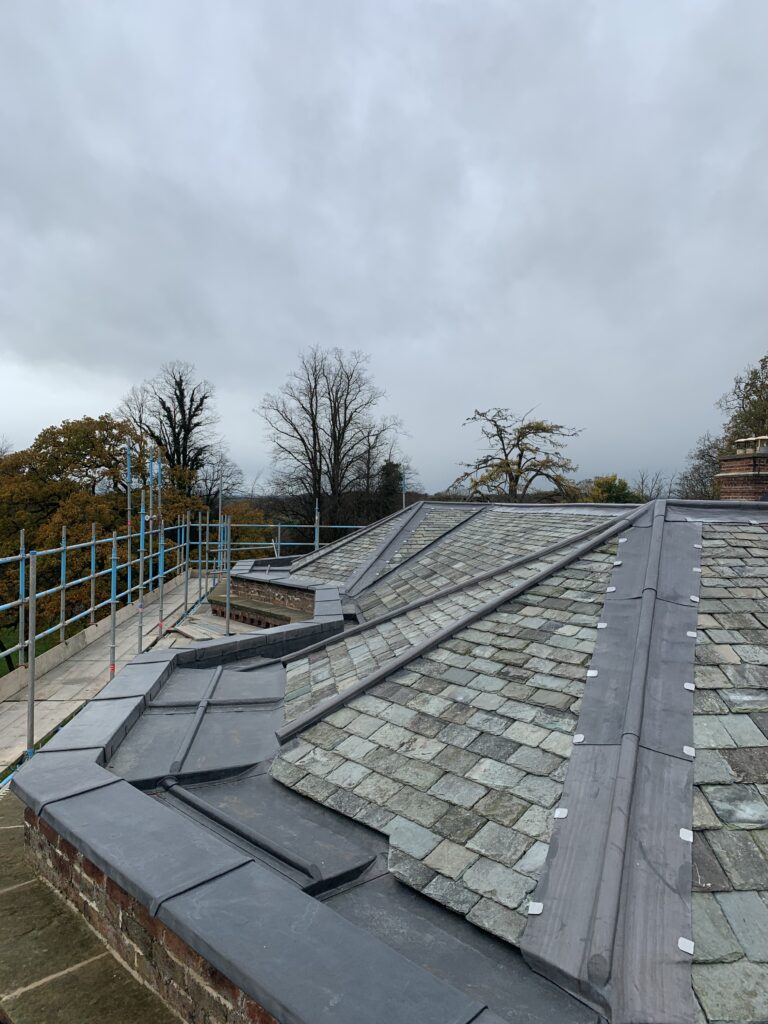
Very deep parapet gutters, cathedral valleys and monumental box gutters can justify heavy sand cast bays because of the combined depth, catchment and access challenges. In these locations, the extra mass and thickness provides long-term stability.
- Cathedrals and major churches: high-level gutters, clerestory and parapet channels with limited access.
- Palaces and royal residences: deep parapets protecting priceless interiors.
- Monumental civic buildings: museums, galleries, courts and town halls with complex drainage and heritage controls.
- Historic estates: listed houses and estates where cast lead is part of the architectural language.
Even on these projects, rolled sheet (Codes 5–8) is still widely used for smaller details. The decision to specify sand cast lead is usually location-specific and driven by risk, depth, heritage authenticity and access.
6. Typical applications for sand cast lead on heritage roofs
To make the concept more concrete, here are the most common places you will see sand cast lead specified on UK heritage projects:
6.1 Cathedral nave and aisle parapet gutters
Large churches and cathedrals commonly discharge roof water into long parapet gutters running the full length of nave and aisle roofs. These gutters may be deep, narrow and largely inaccessible. Heavy sand cast lead bays provide mass and stiffness so that movement is controlled and fatigue risk is minimised.
6.2 Historic valley gutters serving multiple roofs
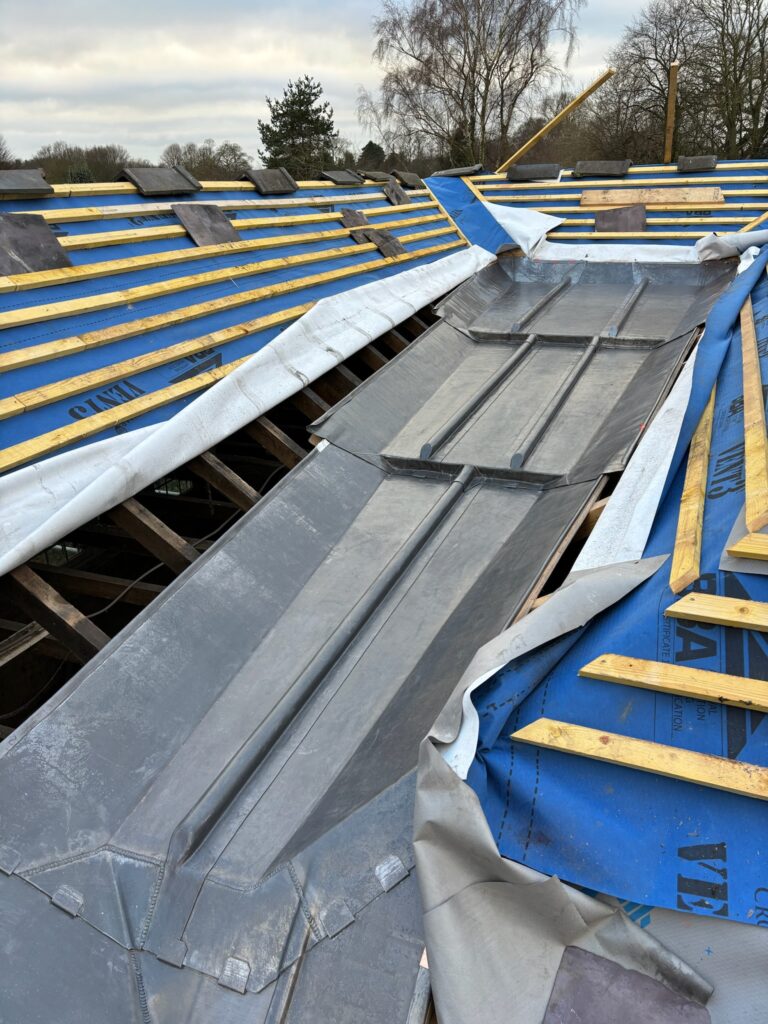
Historic complexes often include valley gutters that collect from several roof planes at different heights and pitches. Depths can be significant, and overflows may be difficult to integrate. Sand cast bays (often in “Code 9” or heavier equivalents) add resilience in these complex junctions.
For design guidance on valley geometry, see our dedicated valley gutters guide and use it alongside any sand cast specification.
6.3 Deep internal box gutters between major roof structures
In palaces, museums and civic buildings, internal box gutters often sit between major structural elements, high above finished floor level. They may drain large areas and be very difficult to inspect. Where access is constrained and the consequences of failure are severe, sand cast lead offers a conservative long-term solution.
6.4 Parapet gutters behind stone cornices and balustrades
Classical façades often rely on concealed gutters behind cornices and balustrades. Water can travel long distances before dropping into downpipes, and historic stonework is extremely sensitive to staining and saturation. Sand cast bays in these gutters can be detailed with careful drips and oversails to protect the stone and ensure stable performance.
6.5 Tower, lantern and steeple gutters
High-level gutters around towers and lanterns experience intense wind exposure and driven rain. They are also some of the hardest locations to scaffold and repair. For that reason, design teams often specify sand cast lead for the main gutters around these features, and then use rolled sheet for smaller flashings and aprons.
6.6 “No-fail” gutters over archives, organ lofts and galleries
Some gutters sit directly above organ lofts, archives, galleries or specialist plant rooms. Any leak in these positions could be catastrophic. In such cases, the cost premium for sand cast lead is often modest compared with the potential cost of water damage and disruption. It becomes an obvious risk-reduction measure.
7. Design principles for sand cast lead: bays, movement, falls & ventilation
Whether you are an architect, a buyer or a contractor, it is important to remember that sand cast lead is not a magic material. It will only deliver the century-scale service lives often associated with heritage work if it is designed and installed correctly.
7.1 Bay sizing
Because sand cast lead is so heavy and thick, bay sizes are usually shorter and narrower than for equivalent rolled sheet. Typical bay lengths are often in the 1.0–1.2 m range, with widths tuned to depth, location and support.
7.2 Movement
Thermal movement remains the number one concern. Bays must be free to expand and contract. This means avoiding rigid fixings at both ends, supporting drips properly, and using rolls or welts to create natural movement breaks.
7.3 Falls and drainage
Deep gutters in sand cast lead still require proper falls. Flat or back-fall sections will trap silt and water, accelerating corrosion and fatigue. A design fall of 1:60 is often targeted on heritage projects, with 1:80 treated as an absolute minimum.
Use our dedicated lead box gutters guide alongside this handbook to set out widths, depths, drips and falls for long gutters. For rolled bays feeding into sand cast troughs, align details so that movement and drainage are continuous.
7.4 Ventilation beneath the sheet
Good practice now emphasises ventilation beneath all lead sheet, but it is particularly important for sand cast lead in deep gutters. A ventilated void beneath boards, combined with appropriate underlay, helps control condensation and protects the underside of the sheet.
We will explore substrates, underlays and support in more detail in Section 8 of this handbook (see Part 2 of the HTML code), but the key buyer takeaway is simple: do not commission or accept sand cast lead bays laid straight onto solid, unventilated concrete or stone without an appropriate build-up and detailing strategy.
8. Substrates, underlays and support for sand cast lead
Substrate design is where many specifications succeed or fail. Even the best sand cast lead will fatigue prematurely if it is dragged across a rough substrate, locked against movement or laid on a cold, damp structure with no ventilation strategy.
8.1 Substrate materials
Most conservation specifications favour a boarded substrate over structural timbers or steelwork, often with a ventilated void beneath. Common build-ups include:
- Softwood or hardwood boarding over joists or steel framing, with ventilation paths beneath.
- Exterior grade plywood fixed over treated timbers where a flatter plane is required.
- Hybrid build-ups over masonry or concrete, including counterbattens to create air gaps.
Whatever the structure, the surface beneath sand cast lead must be continuous, smooth, well-supported and free of sharp edges, nail heads or debris that could abrade the underside.
8.2 Underlays and separation layers
Underlay is not optional on high-value heritage work. A suitable lead underlay or building paper provides:
- Reduced friction so the sheet can move freely under thermal cycles.
- Separation between metal and potential contaminants in the substrate.
- Improved acoustic and mechanical behaviour under foot traffic and water impact.
Modern specialist membranes can also help to manage moisture beneath the sheet. Check your chosen product is compatible with lead and approved for heritage applications before specifying it in a scheme.
8.3 Support at drips and transitions
Drips, steps and transitions in sand cast lead must be formed over solid, continuous support. Unsupported metal at these points will eventually crack. Good practice includes:
- Timber packers or shaped boards directly beneath drips.
- Carefully detailed drip and oversail systems where gutters discharge over stonework.
- Alignment between structural breaks and movement joints in the lead sheet.
9. Ordering workflow and cutting schedules
Unlike rolled sheet, sand cast lead is rarely available ex-stock in the exact sizes you need. Ordering it is more akin to commissioning bespoke components than buying commodity rolls. A clear, disciplined workflow will save time and avoid costly rework.
9.1 Step-by-step ordering workflow
- Confirm locations: identify which gutters, flats and parapets truly require sand cast, and where rolled sheet will be sufficient.
- Agree gauges: select approximate “code” equivalents (e.g. Code 9 / Code 10) for each location, backed by design calculations and heritage rationale.
- Design bay layout: set bay lengths, widths, laps, drips and falls in line with conservation guidance and BS 6915 principles.
- Prepare cutting schedule: list each bay with quantity, length, width, gauge and any special features.
- Cross-check against weight: use the Lead Weight Chart to confirm that individual bays are liftable and practical.
- Submit schedule for casting: send to your chosen supplier and agree lead times, tolerances and delivery sequencing.
- Coordinate fixings and ancillaries: add leadwork fixings, underlay and patination oil so everything lands on site together.
9.2 Using the Lead Lads Shoppable Lead Chart
For rolled sheet, the Shoppable Lead Chart lets roofers build an order in minutes from a mobile. Although sand cast lead is more bespoke, you can still use the same tool to:
- Confirm rolled sheet requirements for adjacent details.
- Cross-check widths and lengths for comparable bays.
- Generate a baseline shopping list of underlay, fixings and accessories.
For fully bespoke sand cast requirements, you can then append a cutting schedule and request a specific quotation from The Lead Lads or your chosen supplier.
10. Delivery, storage and handling
Because individual bays of sand cast lead can weigh tens of kilograms, logistics need to be planned with the same care as casting and design.
10.1 Delivery sequencing
On multi-phase heritage projects, it is common to phase sand cast deliveries to match scaffold access and funding tranches. Consider:
- Which gutters and parapets will be opened first.
- Where bays can be stored safely under cover between casting and installation.
- How cranage or hoisting will be arranged to bring sheets to the workface.
10.2 Site storage
Store sand cast lead flat, on level bearers, under cover and away from direct site traffic. Avoid standing water, aggressive chemicals and incompatible metals nearby.
- Keep pallets or bundles off the ground to prevent contamination.
- Label stacks clearly with location and bay numbers from the cutting schedule.
- Protect edges and corners from impact by forklifts or site vehicles.
10.3 Manual handling
The mass of heavy sand cast bays demands a robust manual handling plan. Refer to your Manual Handling for Rolled Lead Sheet guidance and adapt it for the higher weights involved.
- Plan team lifts or mechanical assistance for heavier bays.
- Use appropriate gloves and PPE to protect against cuts and contamination.
- Integrate handling routes into the scaffold and access design.
11. Installation, QA and sign-off
Installation of sand cast lead should be undertaken only by experienced leadworkers familiar with heritage detailing, BS 6915 principles and conservation expectations. Buyers and specifiers should look for:
11.1 Competence and accreditation
Reputable heritage lead contractors often hold memberships or accreditations with bodies such as the Lead Contractors Association (LCA) or similar trade organisations, and can demonstrate a portfolio of completed church, cathedral or historic estate projects.
Contractors such as GNR Roofing and The Lead Lads Heritage Leadwork team operate within this space and can advise on both design refinement and safe delivery.
11.2 On-site QA checks
Before bays are laid, and again before sign-off, carry out structured QA checks:
- Confirm bay sizes and gauges match the cutting schedule.
- Inspect substrates, underlays and drips for continuity and support.
- Check falls using levels or laser lines, not just eye.
- Review laps, welts and rolls for alignment with the design intent.
11.3 Testing and commissioning
On critical gutters, a controlled hose test (carried out safely and agreed in advance) can be invaluable. Observe how water tracks along drips, laps and corners. Any sign of back-fall, ponding or tracking down masonry should be rectified before scaffold is struck.
12. Maintenance, QI inspections and repairs
One of the strengths of sand cast lead is its ability to deliver service lives measured in many decades, often well beyond a century. To realise that potential, a structured maintenance and inspection regime is essential.
12.1 Regular maintenance
- Keep gutters clear of leaves, moss and debris.
- Check outlets, overflows and sumps at least annually.
- Monitor vulnerable corners and drips for signs of mechanical damage.
12.2 Quinquennial inspections (QI)
For churches and many heritage buildings, quinquennial inspections by a conservation architect or surveyor provide the backbone of maintenance planning. During QIs, inspectors will typically:
- Document cracking, splits or signs of fatigue in the sheet.
- Record ponding, staining or corrosion on and around gutters.
- Evaluate the condition of substrates and associated stonework.
- Recommend phased repairs or replacement if necessary.
12.3 Repairs to sand cast bays
Repairs should be approached cautiously. Localised patches may be acceptable for minor defects, but extensive welding or over-cladding can create new stress points. Many conservation teams prefer targeted bay replacement to maintain long-term reliability.
13. FAQs on sand cast lead
Is sand cast lead covered by BS EN 12588?
No. BS EN 12588 applies only to rolled sheet. Sand cast lead is specified and controlled via project specs, heritage guidance and conservation best practice.
Is sand cast always better than rolled lead?
Not necessarily. Rolled sheet (Codes 5–8) is excellent for many roofs and details. Sand cast bays are reserved for locations where authenticity, depth, risk or access justify the extra cost and complexity.
How long can sand cast lead last?
With good design, ventilation and maintenance, sand cast gutters have known service lives exceeding 150 years, and many historic examples have been in place for much longer.
Can sand cast lead be mixed with rolled sheet on the same project?
Yes. It is common to see sand cast bays in major gutters and rolled sheet used for smaller flashings and details, provided the interface details are compatible and clearly documented.
Who should I talk to about a specific project?
Discuss your scheme with experienced heritage contractors such as GNR Roofing or The Lead Lads Heritage Leadwork team. They can help refine bay layouts, substrates and ordering schedules before casting begins.