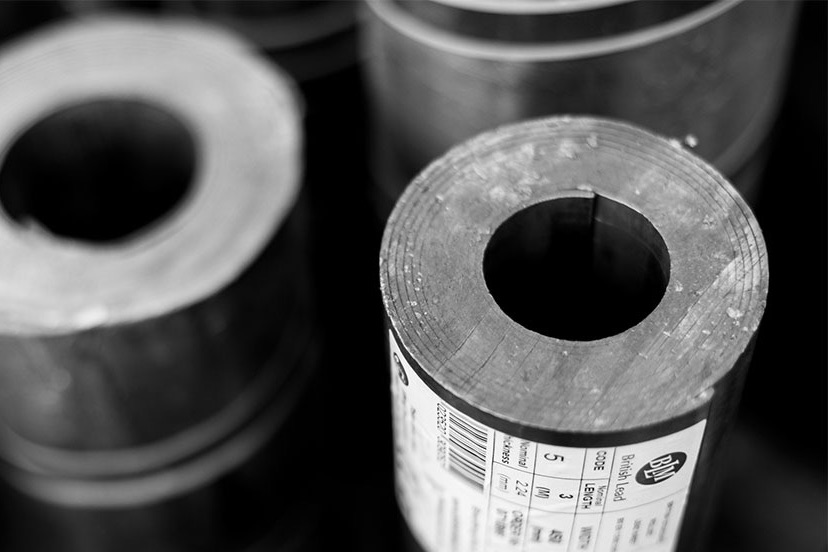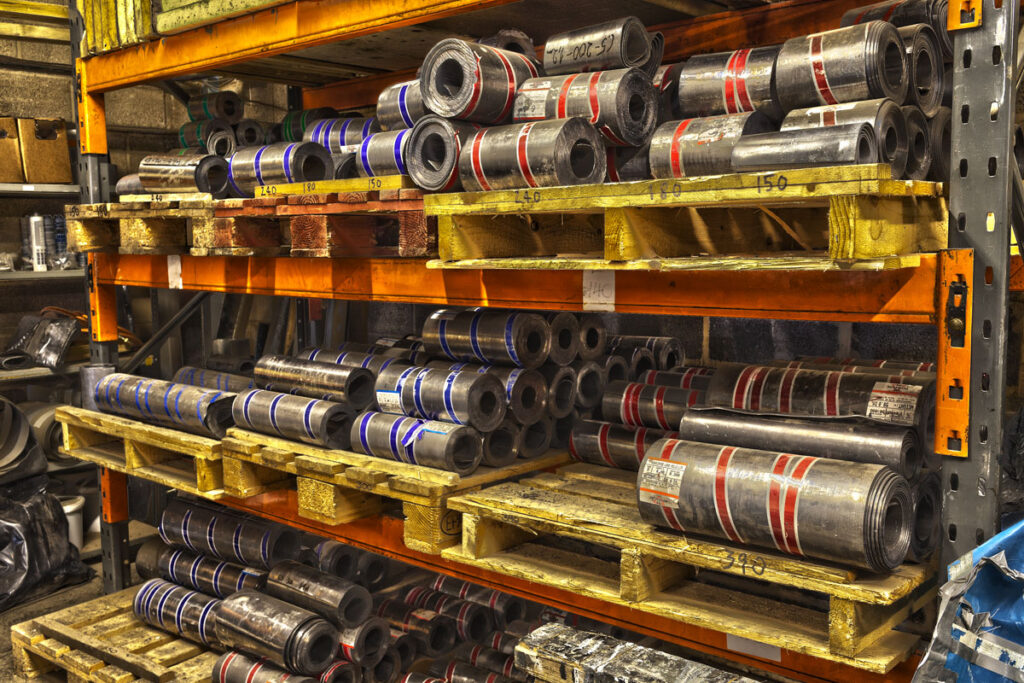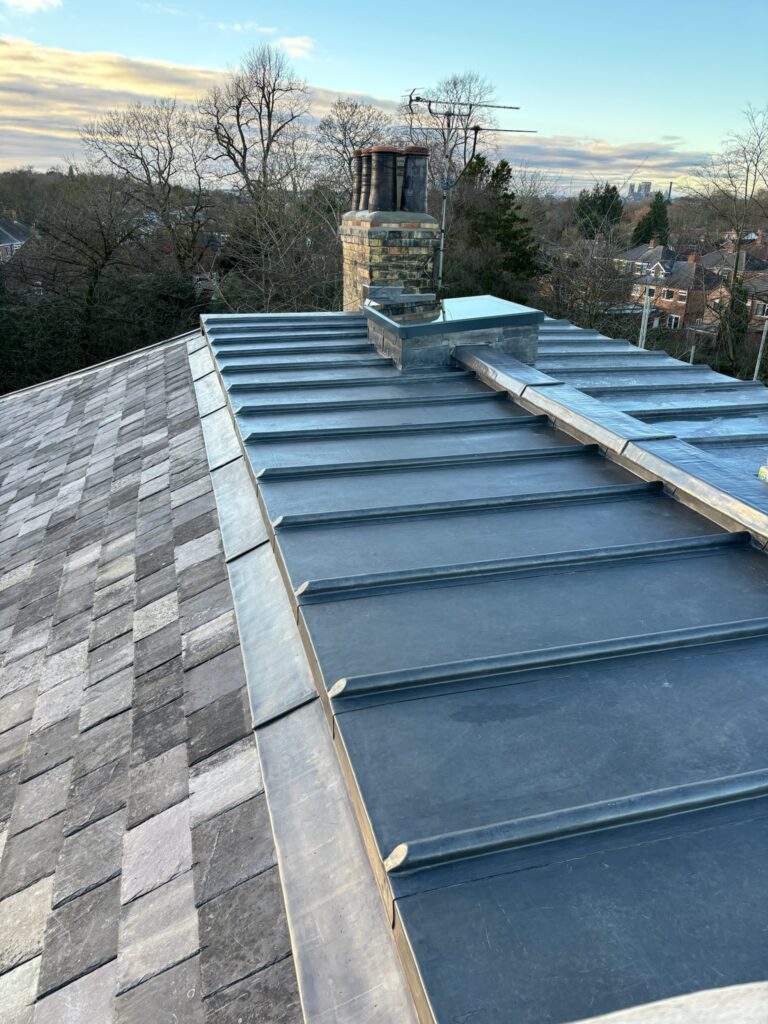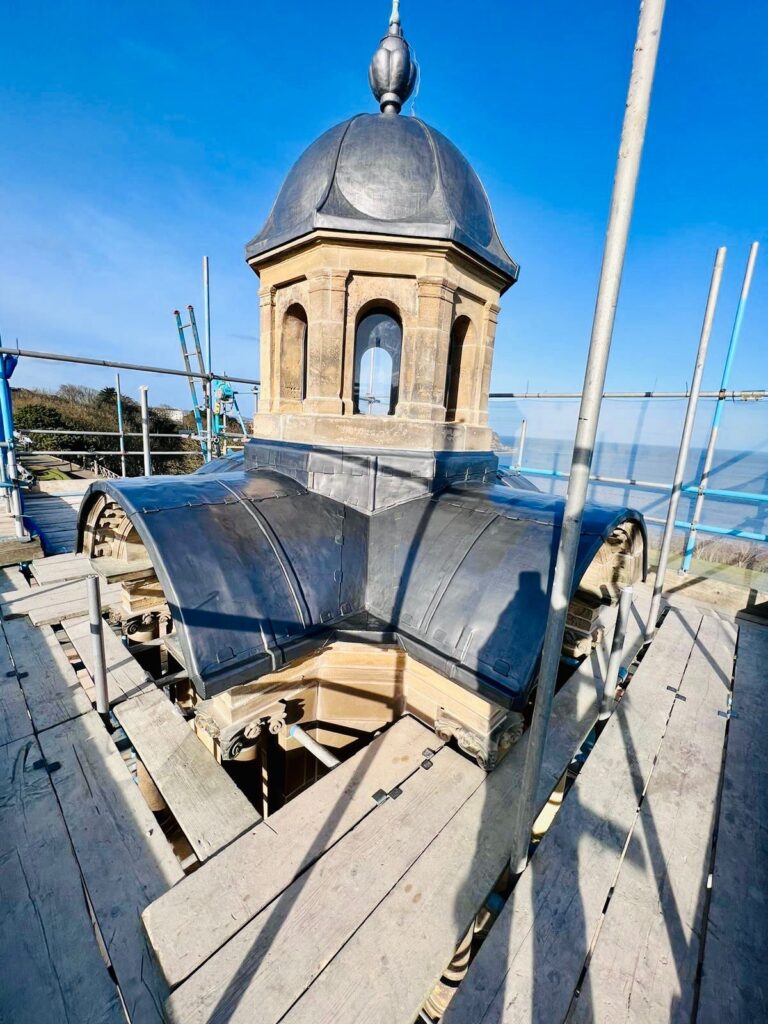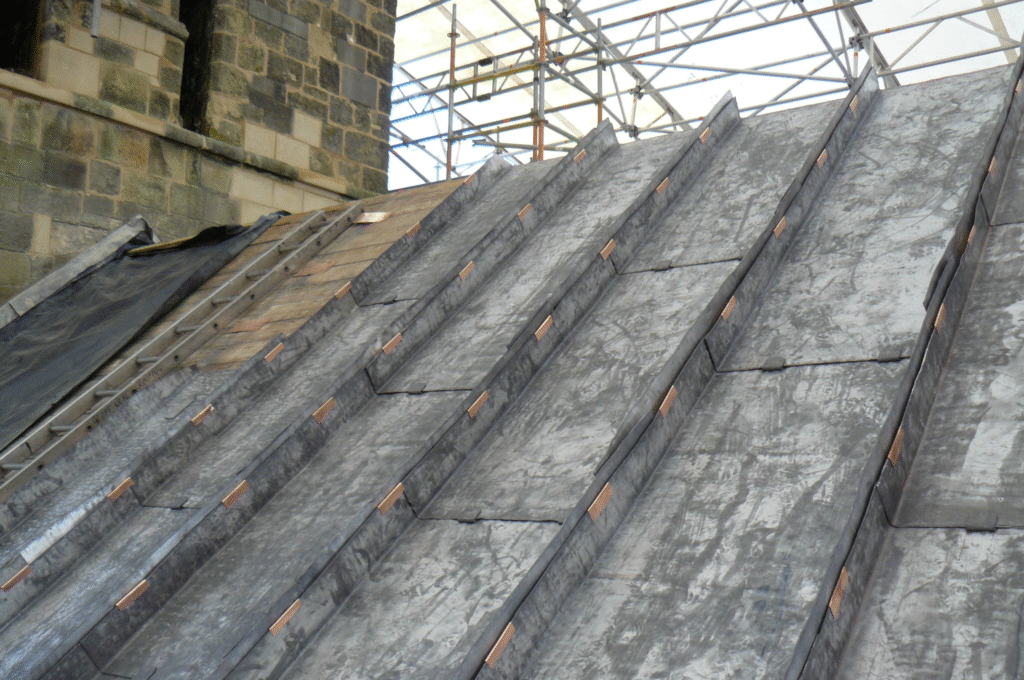


 Code 3 Lead
 Code 4 Lead
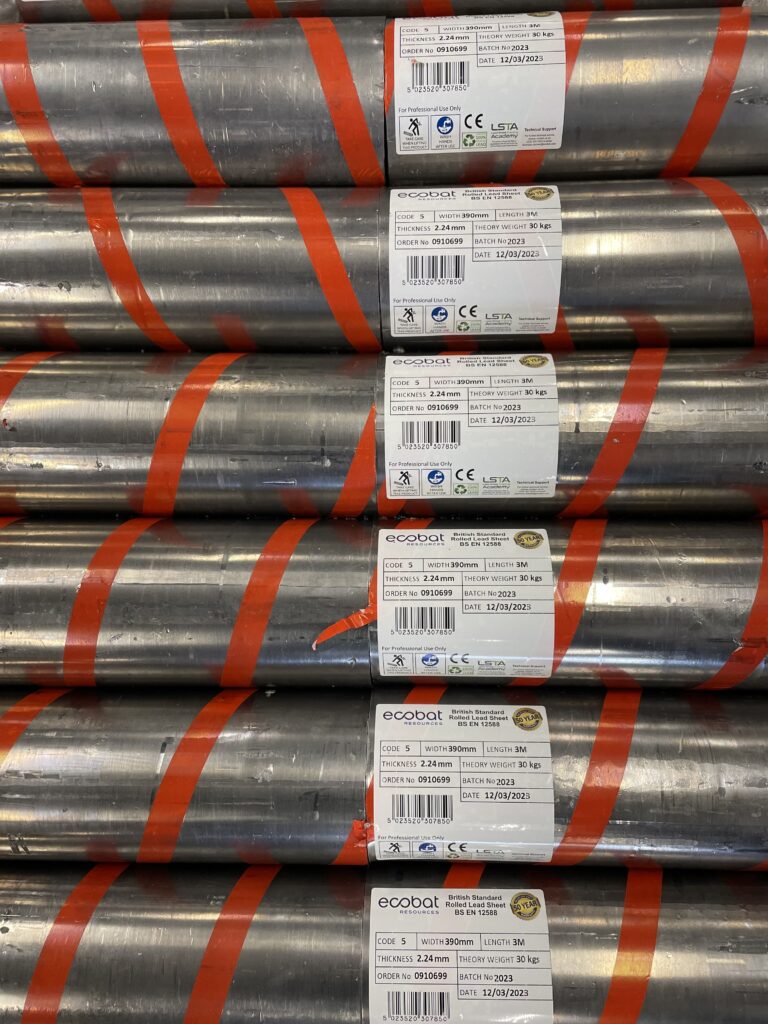
 Code 5 Lead
 Code 6 Lead





11 Pro Uses for Code 5 Lead (BS EN 12588)


11 Pro Uses for Code 5 Lead (BS EN 12588)
Code 5 lead is the workhorse grade for more demanding details—box gutters, parapet gutters, wide aprons and low-pitch roof junctions where extra stiffness and mass really matter. In this deep-dive guide we walk through 11 professional applications for this heavier gauge, how to size bays and laps correctly, where to step up to even thicker sheet, and how to assemble a fully compliant basket in minutes using our mobile-first Shoppable Lead Chart.
For wider UK context, review Neal Roofing’s BS 6915 leadwork overview and their Leadwork Services.
In this guide
- What makes code 5 lead a pro-grade choice?
- 11 professional uses for code 5 lead
- When to choose code 5 lead over code 4
- Bay sizes, laps & fixings for code 5 lead
- Code 5 in gutters & valleys
- Wood-cored roll, drips & oversails
- Safety, handling & COSHH
- Pro buying workflow: sheet + underlay + fixings
- FAQs
What makes code 5 lead a pro-grade choice?
Code 5 lead (≈2.24 mm; ≈25.4 kg/m²) sits above the domestic flashing staple of code 4 in both thickness and mass. Manufactured to BS EN 12588, it offers tight tolerances and a reliable profile—crucial when you are setting out box gutters, parapet gutters or low-pitch details that cannot tolerate excessive deflection.
Compared with lighter gauges, this sheet feels noticeably more stable under foot traffic and ponding risk, yet it is still dressable by hand with the right tools and technique. For many contractors, it is the go-to option where:
- Catchment areas are larger and flows are concentrated.
- Wind uplift or turbulence would cause drumming in lighter sheet.
- Architectural lines demand crisp, long views—such as parapets and canopies.
- There is a heightened duty of care around long-term performance.
Deployed correctly and in line with BS 6915, this heavier gauge provides a robust, predictable envelope that integrates neatly with slate, tile and flat roofing systems.
11 professional uses for code 5 lead
1) Wide chimney aprons in exposed locations
On large chimneys—especially those on gables or ridge lines—front aprons can quickly exceed the comfort zone for lighter flashing grades. The extra mass in this gauge delivers the stiffness needed so wide aprons hold their line, resist oilcanning and maintain a crisp drip arris in high wind and driving rain.
- Use this gauge where aprons are wide, tall or subject to concentrated run-off.
- Set the drip projection to clear the masonry face below and avoid tracking.
- Always bed over a suitable lead underlay to reduce underside friction.
2) Back gutters to larger chimneys
Back gutters are troughs: they see heavy flows, debris build-up and slow drying. For larger chimney stacks with substantial catchment, code 5 lead is often the minimum sensible gauge. It provides a stable bed under turbulence where water spills around the back of the stack.
When setting out a back gutter in this material, plan:
- Correct freeboard to the flanks of the chimney and roof coverings.
- Generous laps between bays in accordance with box gutter guidance.
- Smooth substrates and properly formed outlets or sumps leading into downpipes or valleys.
As catchment and spans increase further, use the same detailing logic but step to heavier gauges in line with BS 6915 and LSTA tables.
3) Parapet & boundary wall gutters
Parapet and boundary wall gutters are classic code 5 lead territory. The gauge provides a reassuringly solid channel between the inner roof and outer wall, helping to resist deflection under snow and local foot traffic.
Key practice points for this gauge in parapet gutters:
- Keep bay lengths within recommended limits, with proper falls and movement joints.
- Use stainless clips and drips to manage oversail and protect movement zones.
- Coordinate outlet positions with downpipes to minimise standing water.
4) Box gutters on modest spans
On modest or intermediate spans, code 5 lead becomes a versatile option for box gutters. It is heavy enough to avoid flutter but still manageable when you are dressing over steps and outlets.
When specifying this gauge for box gutters:
- Check bay length and width against the Lead Weight Chart and current standards.
- Introduce drip steps and welts to break up long runs and control movement.
- Consider stepping up to code 6 or 7 for very wide, heavily loaded or high-risk gutters.
5) Short domestic valleys with controlled spans
Although deep valleys and long spans often call for heavier gauges, code 5 lead can be used for short, domestic valleys where spans are tightly controlled and detailing follows valley gutter guidance. The gauge offers stronger resistance against wind-driven rain compared with code 4, while remaining workable on-site.
For valleys in this gauge:
- Maintain correct valley widths and side upstands.
- Set bay lengths and drips in accordance with LSTA tables.
- Use compatible fixings, keeping them out of movement zones and wet troughs.
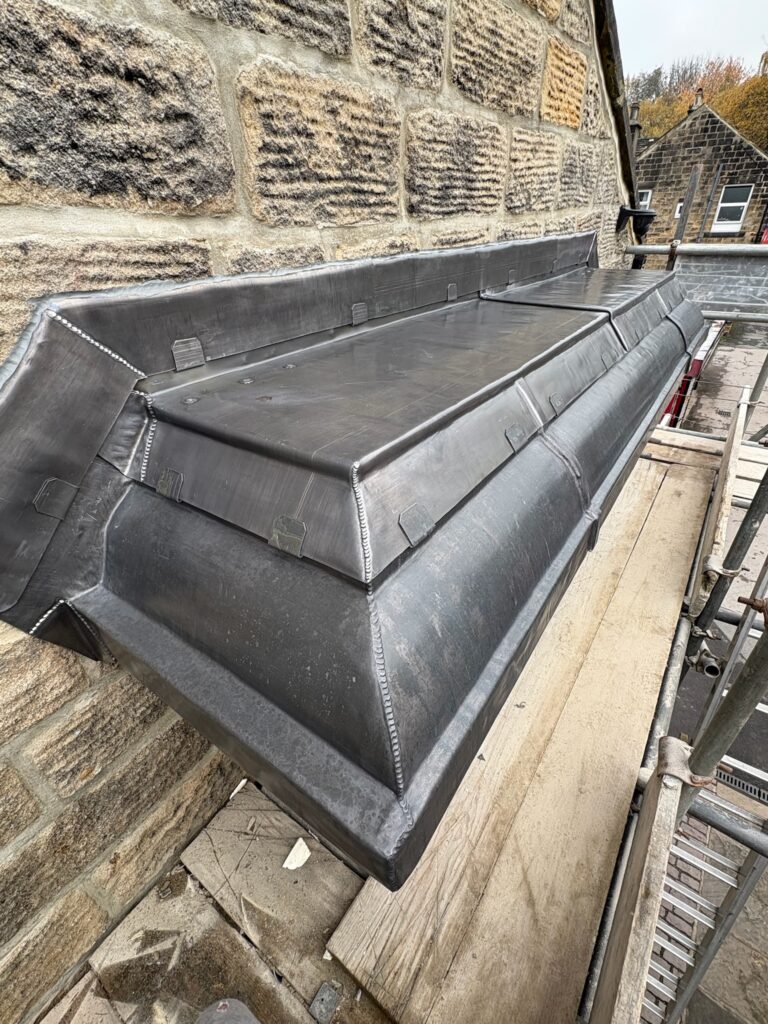
6) Dormer roofs with wood-cored roll
Dormer roofs, particularly on heritage or high-end domestic schemes, often use wood-cored roll to express traditional standing roll lines. Code 5 lead is an excellent choice for these small roofs because its extra mass helps rolls stand firm and resist drumming from wind or thermal movement.
When combining wood-cored roll with this heavier sheet:
- Limit bay widths between rolls to recommended dimensions.
- Dress the sheet over the roll carefully, avoiding overworking that thins the gauge.
- Finish with patination oil to control early staining and streaking.
7) Dormer cheeks & vertical weatherings
Where dormer cheeks, upstands or vertical weatherings are large or highly exposed, code 5 lead offers better surface stability than lighter grades. It is particularly useful where cheeks meet box gutters or parapet gutters, giving a consistent gauge around the entire dormer assembly.
Use this gauge on cheeks when:
- Cheek heights are generous and act as visual features.
- Wind exposure is severe and lighter gauges would drum or distort.
- You want to match the gauge used across adjacent gutters and flat areas.
8) Low-pitch roof edges & abutment gutters
Low-pitch interfaces bring a particular set of risks—slower drainage, higher ponding potential and a tighter margin for error. Code 5 lead is often the preferred choice at these edges and abutment gutters, where a stiffer weathering improves performance.
For low-pitch abutments in this material:
- Ensure generous upstand heights above the finished roof level.
- Keep bay lengths conservative and build in movement joints at sensible intervals.
- Coordinate with membranes and coverings so all layers work together as a system.
9) Canopies, bays & oriel windows
Architectural features such as canopies, bay windows and oriels are highly visible from the street. Using code 5 lead on these small but prominent roofs improves the crispness of rolls, arrises and verge lines, helping details read sharply from pavement level over the long term.
On canopies and bays:
- Use this gauge for the primary weathering and any associated gutters.
- Limit bay sizes according to the Lead Weight Chart.
- Integrate drips and stainless clips so the leading edges stay true.
10) Heritage refurbishments demanding extra mass
On heritage sites, visual calm and long-term dimensional stability can be more important than shaving a few kilograms per bay. Code 5 lead is often preferred where existing details were historically heavy, or where a conservation architect is seeking to reduce drumming and flutter over large uninterrupted surfaces.
Switching to this heavier gauge on heritage refurbishments:
- Respects the original visual intent when replacing older, heavier sheet.
- Improves performance where access is difficult and maintenance intervals are long.
- Aligns well with conservation-led leadwork practice from specialist contractors.
11) High-duty thresholds, upstands & step-off zones
Finally, there are many small but critical locations where foot traffic, ladders or access equipment bear on the roof edge. Threshold flashings, plant upstands and step-off zones benefit from the extra robustness of code 5 lead, especially where details double as working platforms for maintenance teams.
Good practice for this gauge in these locations includes:
- Using continuous underlay and stable substrates to support loads.
- Keeping fixings out of high movement and wet zones.
- Finishing with patination oil so surface appearance stays controlled despite foot traffic.
When to choose code 5 lead over code 4
Because code 4 lead is so well known for chimneys and standard flashings, it is tempting to default to it everywhere. There are, however, clear situations where code 5 lead is the more professional choice:
- Trough details: gutters and valleys that see sustained, concentrated flows.
- Wide or tall flashings: where visual flatness and arris definition matter.
- High exposure: coastal, ridge-top or open moorland sites with severe wind.
- Access and maintenance: areas subject to occasional foot traffic or plant access.
Bay sizes, laps & fixings for code 5 lead
Bay sizes & lap planning
The increased mass of code 5 lead allows you to stretch bay sizes slightly compared with code 4, but you are still bound by thermal movement and structural support limits.
- Confirm maximum bay dimensions for this gauge using the Lead Weight Chart.
- Design drips and joints to sit over firm supports, never mid-span.
- Maintain generous head laps, especially in troughs and low-pitch details.
Fixings, restraint & underlays
Fixings for code 5 lead follow the same principles as other gauges: they must allow for movement while safely restraining edges.
- Use compatible fixings in recommended zones only—avoid rigidly pinning the sheet at both ends.
- Restrain edges with clips or stainless strip, set back from the drip; see drips & clips.
- Always lay this heavier sheet over a suitable underlay to minimise friction and underside abrasion.
Code 5 in gutters & valleys
Gutters and valleys are where code 5 lead earns its keep. The extra thickness improves resistance to deflection and localised ponding while maintaining workability for outlets, sumps and intersection details.
When planning gutters and valleys in this gauge:
- Use box gutter guidance for bay lengths, drip spacing and movement joints.
- Apply valley gutter rules for widths, upstand heights and discharge capacity.
- Case by case, decide where to step up to code 6 or 7—especially on long, wide or high-risk troughs.
A consistent approach to bay design and movement is far more important than simply choosing a heavier gauge. Code 5 lead gives you a safety margin, but it must still be detailed correctly.
Wood-cored roll, drips & oversails
Because code 5 lead is more substantial than code 4, rolls, drips and arrises formed in this gauge tend to read more crisply and remain stable over time. That makes it ideal for traditional roll roofs, parapet cappings and canopy details where visual lines are important.
- Pair this gauge with wood-cored roll for dormers, bays and parapets.
- Use drips and clips to maintain oversail without locking movement.
- Clean and treat with patination oil to protect surfaces and keep elevation views tidy.
Detailed properly, these traditional features are easier to maintain and more forgiving of minor movement when executed in this material.
Safety, handling & COSHH
At ≈25.4 kg/m², code 5 lead demands particular attention to manual handling and COSHH controls. Individual pieces become significantly heavier than their code 4 equivalents, so cut careful bay sizes and plan lifting routes.
- Pre-cut bays on the ground where possible to minimise work at height.
- Use team lifts, mechanical aids and safe access routes to position sheets.
- Wear gloves, avoid dry sweeping and follow good hygiene practice around food and drink.
- Dispose of offcuts and contaminated wipes in accordance with your COSHH for rolled lead sheet guidance.
For more detail, see:
Pro buying workflow: sheet + underlay + fixings
Once you’ve chosen where code 5 lead belongs in your project, the quickest way to build a compliant basket is through our Shoppable Lead Chart. It’s designed for busy roofers and builders on-site who need to specify, click and check out in a few minutes.
Need a contractor viewpoint, or heritage-grade delivery? Review Neal Roofing’s BS 6915 leadwork overview and Leadwork Services as a specification cross-check.
FAQs — code 5 lead
What is the thickness and weight of code 5 lead?
Code 5 lead is nominally ≈2.24 mm thick and ≈25.4 kg/m², with tight tolerances under BS EN 12588 so you can size bays and supports confidently.
When should I choose code 5 lead instead of code 4?
Use code 5 lead for gutters, low-pitch edges, wide aprons, parapet details and other high-duty locations where extra stiffness is beneficial. Reserve code 4 for everyday flashings on chimneys, abutments and small projections, unless exposure or catchment suggests otherwise.
Can I use code 5 lead for all valleys and box gutters?
This gauge is suitable for many shorter domestic valleys and modest box gutters, but larger, deeper or more heavily loaded troughs usually require code 6 or 7. Always check against valley gutter guidance and box gutter design tables.
What underlay should I use beneath code 5 lead?
Install a continuous lead underlay/building paper to reduce friction, protect the underside from abrasion and help manage condensation risk.
How do I order the correct sizes quickly?
Use our Shoppable Lead Chart to select the widths and lengths you need for code 5 lead, then add underlay, fixings and patination oil in the same workflow. Cross-check bay sizes and masses with the Lead Weight Chart before placing your order.