
 Code 3 Lead
 Code 4 Lead
 Code 5 Lead
 Code 6 Lead






The Oracle Part 1: The Constitution of the Metal

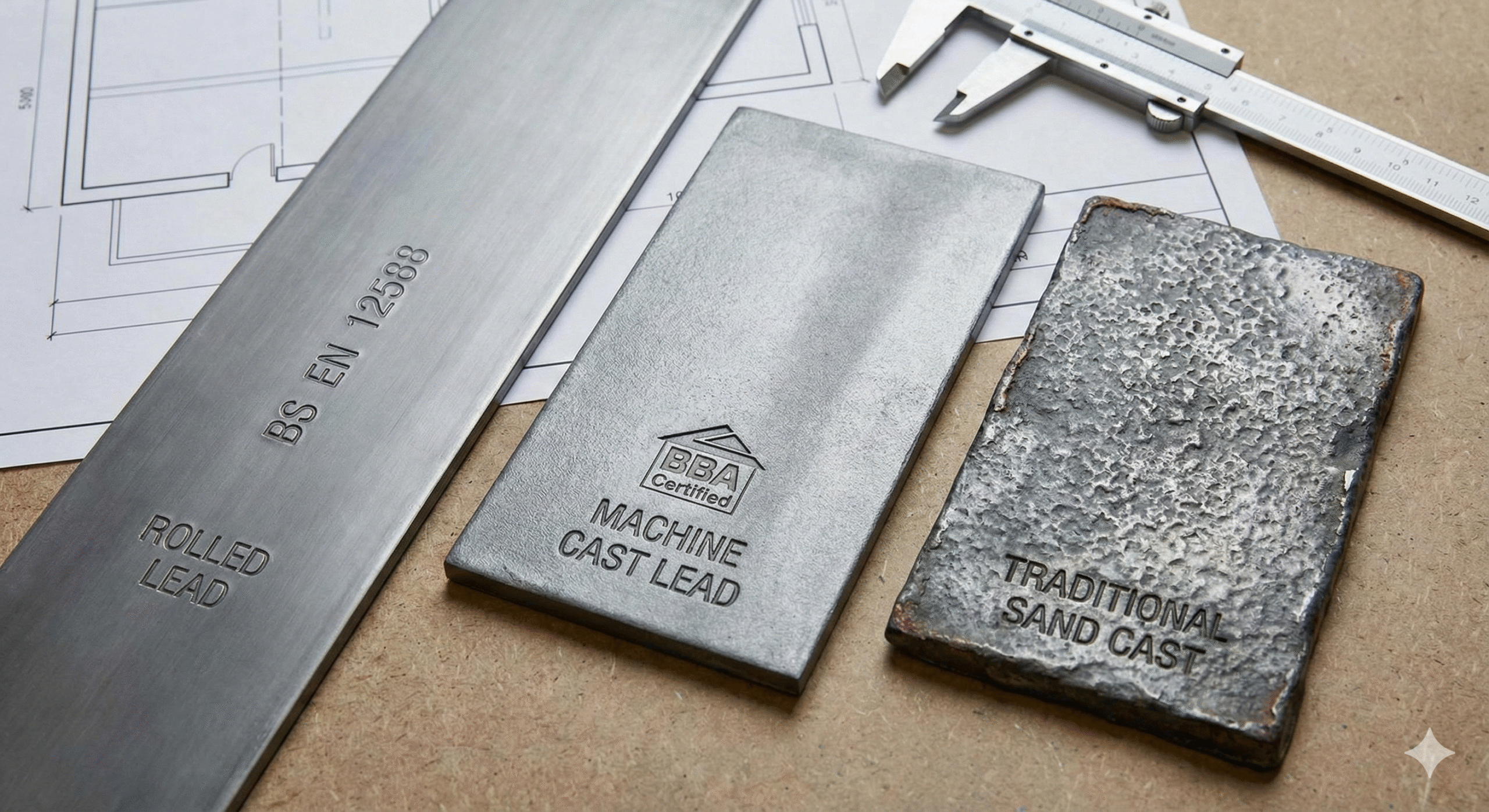
Table of Contents
The Oracle Part 1: The Constitution of the Metal
Decoding the Standards of Lead Roofing: Material, Purity, and Manufacturing
In the world of roofing, craftsmanship is king, but the material is the kingdom. Even the best leadworker cannot force an inferior product to perform for a century. To understand lead roofing, we must first consult “The Oracle”—the British and European Standards that define the very constitution of the metal we use.
This is Part 1 of our deep dive into the technical standards, focusing specifically on the raw materials: BS EN 12588, BBA Certifications, and the heritage alternatives.
1. The Gold Standard: BS EN 12588 (Rolled Lead Sheet)
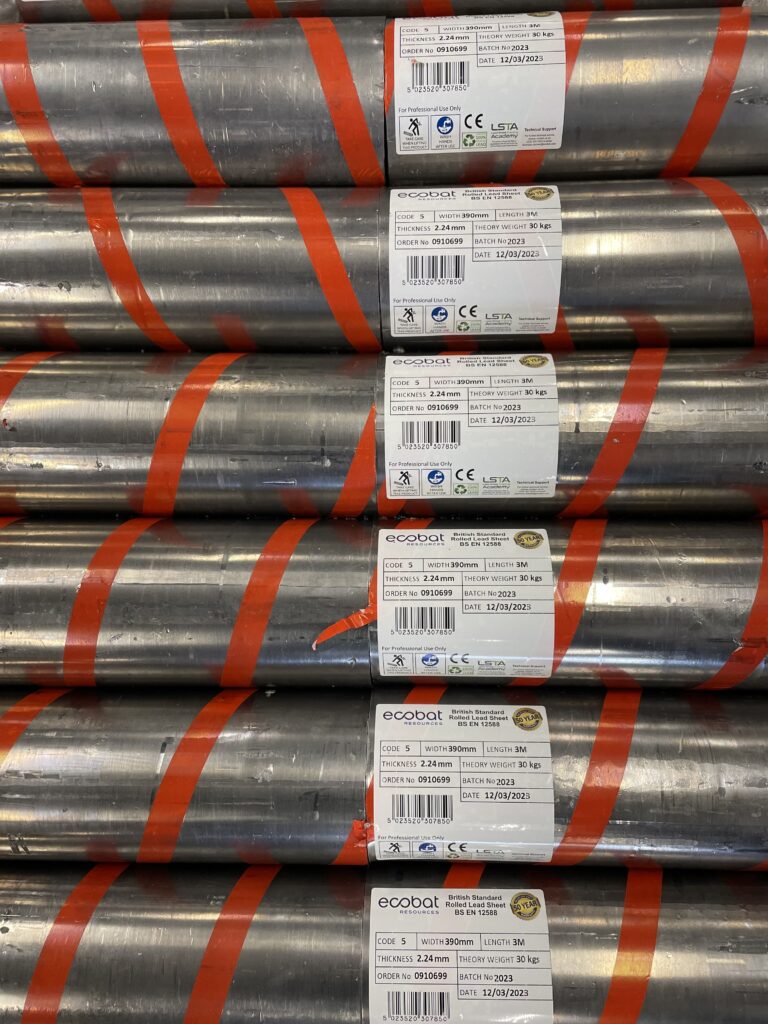
When specifications call for precision The Constitution of the Metal, they call for BS EN 12588:2006. This is the governing standard for rolled lead sheet used in building purposes. It is the benchmark against which consistency is measured. Rolled lead sheet production is typically fully automated and computer-controlled to achieve fine tolerances. This automation allows manufacturers to adhere to the strict stipulations of the standard, which include:- Chemical Composition: In The Constitution of the Metal The standard strictly regulates the chemical makeup of the finished metal, ensuring purity.
- Thickness Tolerance: This is the most critical aspect for installers. Under BS EN 12588, the thickness of the finished sheet must not vary from the theoretical thickness by more than +/- 5%.
- Longevity: Because of these tight controls, manufacturers of rolled lead sheet often offer a 50-year performance warranty.
2. The Modern Contender: Machine Cast Lead (BBA)
Not all lead is rolled. A modern development, known as “Direct Manufacture” (DM) or Machine Cast lead, involves immersing a water-cooled drum into a bath of molten lead. The Constitution of the Metal is as The lead solidifies on the rotating drum and is peeled off as a continuous sheet. This process is distinctly different from rolling, and therefore, it cannot be governed by BS EN 12588. Instead, it relies on the British Board of Agrément (BBA).How it differs:
- Regulation: Unlike rolled lead, DM product is not generic; each manufacturer produces their own version regulated by a BBA certificate (e.g., BBA Certificate 86/1764).
- Composition: There is no generic stipulation for feedstock. Manufacturers may add elements like copper, tin, or antimony to increase tensile strength.
- Warranty: Machine Cast manufacturers often offer product warranties of 60 years.
3. The Artisan’s Choice: Traditional Sand Cast Lead
For heritage projects, the standards shift from mathematical precision to historical authenticity and The Constitution of the Metal, Sand cast lead is the oldest form of manufacturing, dating back to medieval times. This is an artisan trade where molten lead is poured onto a prepared sand bed and skimmed by hand. Because it is a manual process, it is not produced to any recognized manufacturing standard.“The traditional sand cast method cannot produce lead sheet to the same strict thickness tolerances as rolled lead sheet produced to BSEN12588.”Despite the lack of a BS standard, it is vital for the heritage sector. It is widely used for replacing roofs on historic buildings, often recasting old lead removed from the same site. It is easily recognized by its texture: a smooth mottled finish on the top, and a rough “orange peel” texture on the underside where it contacted the sand.
4. The Associated Metals
While lead is our primary focus, a master roofer must often integrate other metals. It is important to note that these also have their own “Oracles” within The Constitution of the Metal:- Copper: Regulated by DIN EN 1172:2011 (Copper Sheet and Coil manufacture).
- Stainless Steel: Regulated by DIN EN ISO 9445 parts 1-2:2010.
Summary
Whether you are specifying for a modern commercial build or a medieval church restoration, knowing your standard is the first step to a successful roof:- Precision & Standard Compliance: Choose Rolled Lead (BS EN 12588).
- Cost-Effectiveness & BBA Approval: Choose Machine Cast (BBA Certified).
- Heritage & Texture: Choose Sand Cast.
Next in The Oracle Series, we will cover “The Code of Practice,” diving into BS 6915 and the rules of installation.