

 Code 3 Lead
 Code 4 Lead
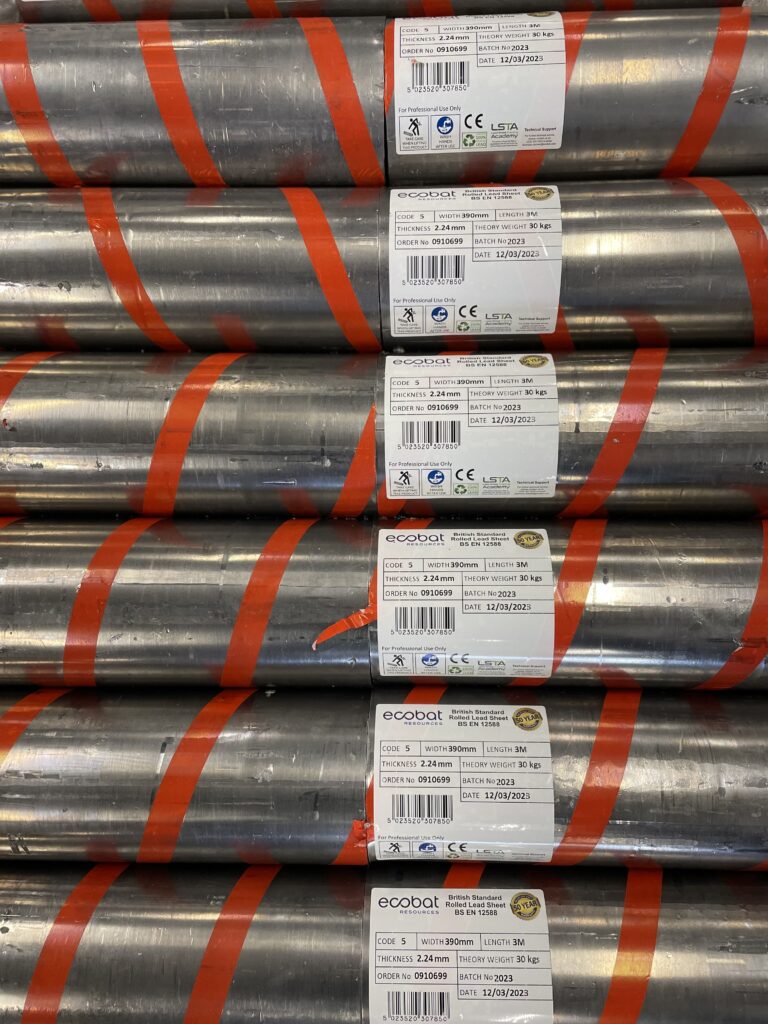
 Code 5 Lead
 Code 6 Lead






450mm Lead Flashing – Code 4 & Code 5 Lead Rolls for Roofing

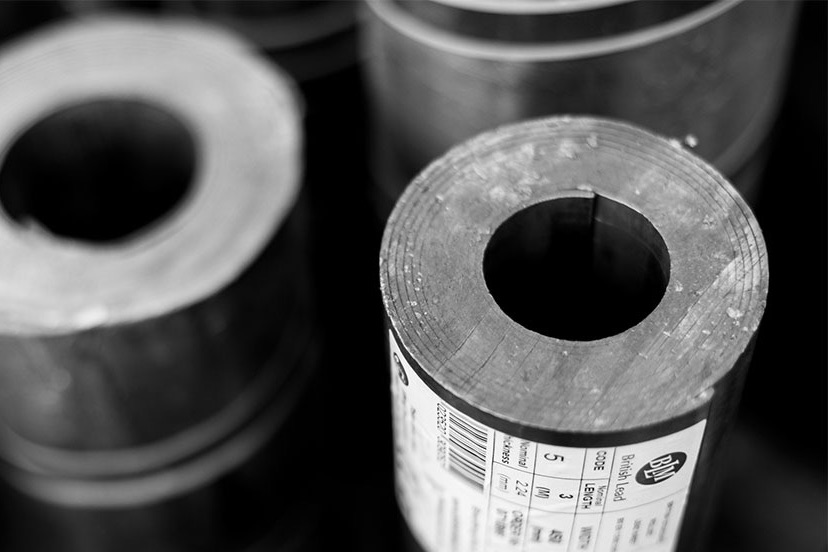
450mm Lead Flashing – Code 4 & Code 5 Lead Rolls for Roofing
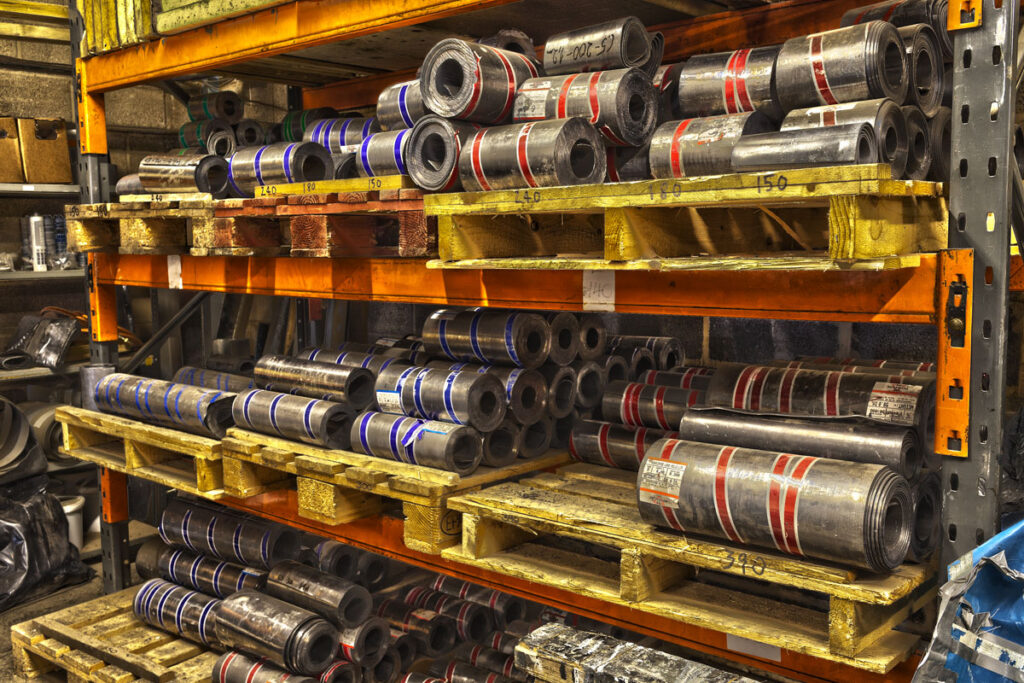
450mm lead flashing is a versatile wider rolled lead sheet format used for substantial roof weatherings, chimney aprons, back gutters, dormer details, parapet junctions and deeper abutments. Compared with narrower flashing widths such as 150mm, 210mm or 300mm, a 450mm lead roll gives the installer considerably more material to form wider cover, larger upstands and more substantial weathering details.
At The Lead Shop by The Lead Lads, 450mm rolled lead sheet is available in practical roofing codes including Code 4 and Code 5. This guide explains when 450mm is the right width, how Code 4 compares with Code 5, approximate 3m and 6m roll weights, common applications and how to buy the correct lead online.
What is 450mm lead flashing used for?
450mm lead flashing sits between everyday narrow flashing rolls and much wider roofing sheet. It is broad enough to handle substantial junctions while still being practical to cut and form on site.
Typical applications include:
- large chimney aprons
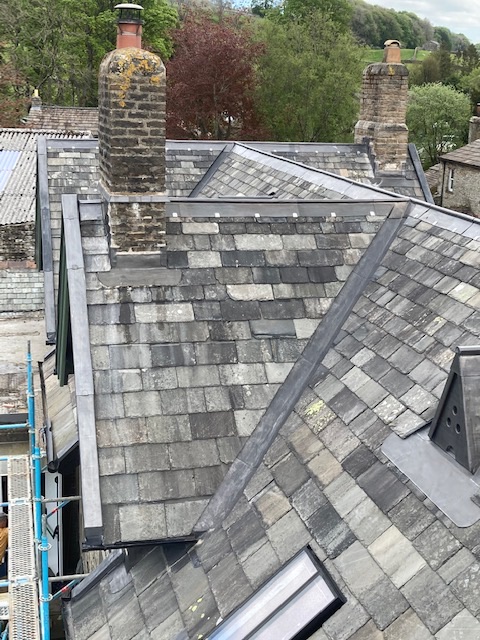
- chimney and roof back gutters
- wide cover flashings
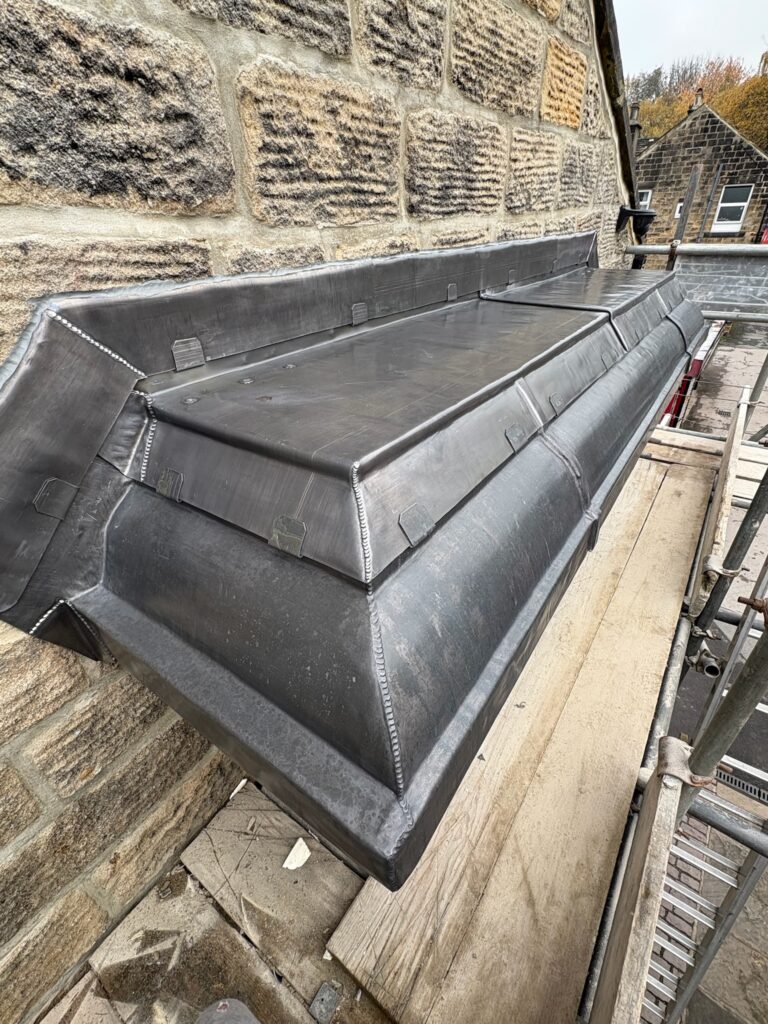
- dormer cheeks and dormer interfaces
- parapet and wall junctions
- rooflight and penetration weatherings
- wider abutment details
- traditional and heritage roofing work
- formed weatherings requiring greater cover than 300mm lead


Code 4 or Code 5 for 450mm lead flashing?
The most useful comparison for 450mm lead flashing is between Code 4 and Code 5. Both are common roofing materials, but the extra mass and rigidity of Code 5 can become more relevant as the width of the lead detail increases.
| Lead code | Approx. thickness | Approx. mass | Typical use at 450mm width |
|---|---|---|---|
| Code 4 | 1.80mm | 20.41kg/m² | Wide cover flashings, large aprons, deeper abutments and many general weathering details |
| Code 5 | 2.24mm | 25.40kg/m² | More substantial aprons, back gutters, parapet details and exposed or demanding weatherings |
For many straightforward wide flashing applications, 450mm Code 4 lead provides a strong balance of weight, durability and workability. Where the detail becomes more substantial, exposed or structurally demanding, 450mm Code 5 lead may offer the better specification.
How much does 450mm lead flashing weigh?
Weight becomes particularly important with a 450mm lead roll. A wider roll contains significantly more material than common flashing widths, especially when moving from a 3m roll to 6m.
| 450mm lead specification | Sheet area | Approx. weight |
|---|---|---|
| Code 4 – 450mm × 3m | 1.35m² | Approx. 27.6kg |
| Code 4 – 450mm × 6m | 2.70m² | Approx. 55.1kg |
| Code 5 – 450mm × 3m | 1.35m² | Approx. 34.3kg |
| Code 5 – 450mm × 6m | 2.70m² | Approx. 68.6kg |
These weights explain why handling needs to be considered carefully when buying wider lead. A 6m Code 5 roll in 450mm width is a substantial item and should not be treated like a lightweight flashing roll.
Use the Lead Weight Calculator to check other widths, codes and lengths before ordering.
450mm lead flashing in 3m rolls
A 450mm lead flashing 3m roll is often the most practical choice for site work. It gives enough material for large weathering pieces without the extreme weight of a 6m roll.
- more manageable for scaffold handling
- well suited to chimney and dormer jobs
- useful for one-off wide weathering details
- reduces the need to manoeuvre very heavy rolls
- allows contractors to cut individual pieces efficiently
At around 27.6kg in Code 4 and 34.3kg in Code 5, a 450mm x 3m roll is already a substantial piece of roofing lead.
450mm lead flashing in 6m rolls
A 450mm lead flashing 6m roll offers better material continuity and can be commercially attractive where contractors use this width repeatedly. It reduces the number of separate rolls required and provides flexibility when cutting multiple larger weathering pieces.
The downside is weight. A Code 4 450mm x 6m roll is approximately 55kg, while Code 5 approaches 69kg. Delivery, lifting and site access should therefore form part of the buying decision.
450mm lead flashing for chimney back gutters
Chimney back gutters are one of the clearest applications for 450mm lead flashing. These details often require significantly more material than a simple front apron because the lead must form a weathering behind the chimney while integrating correctly with the surrounding roof covering.
The actual width required depends on the chimney size, roof pitch, side abutments and geometry of the back gutter. However, 450mm provides a useful starting format for many larger details.


450mm lead flashing for dormers
Dormer roofs and dormer cheeks create several junctions where wider lead can be useful. Depending on the construction, 450mm lead roll may be used to form substantial weatherings around cheek junctions, roof interfaces, upstands and other areas requiring more than a narrow strip of lead.
Fully clad or fully supported dormer roof sections may require heavier codes and much wider lead sheet, so 450mm should not be assumed to be suitable for every dormer detail.
450mm lead for parapet and wall junctions
Parapets often create broad horizontal and vertical interfaces, particularly where roof coverings terminate against masonry or where the lead needs to form a wider weathering over a change in level.
In these situations, Code 5 450mm lead can be particularly useful where the design calls for a more substantial sheet. However, parapet gutters and full-width coverings may need wider Code 5, Code 6 or specialist lead sheet depending on bay size and movement requirements.
450mm lead flashing for rooflight and penetration details
Wider lead is also useful around larger roof penetrations where the flashing must extend farther onto the roof surface or form deep returns around the penetration.
This can include larger rooflights, structural penetrations, dormer interfaces and specialist roof details where 300mm would not provide enough material for a properly formed weathering.
When should I choose 450mm instead of 300mm lead?
Moving from 300mm lead flashing to 450mm normally makes sense where the required weathering needs significantly greater width.
Consider 450mm where:
- the required cover cannot be achieved comfortably in 300mm
- the upstand and roof overlap are both substantial
- the detail includes a broad apron or back gutter
- the roof covering has a deep profile
- you need enough sheet for multiple folds or returns
- the detail has been specifically designed around a wider sheet
Do not automatically use 450mm simply for additional safety. Unnecessary width increases weight, cost and waste.
When is 450mm lead flashing not wide enough?
There are many lead roofing details where 450mm is still relatively narrow. Full bay roofs, valley linings, broad parapet gutters, large box gutters, substantial platforms and fully clad roof areas commonly require 600mm, 750mm, 900mm, 1200mm or wider sheet.
For these details, the correct answer is usually to move into the broader Lead Roll range rather than trying to make a flashing width perform as full roofing sheet.
450mm Code 4 lead flashing
450mm Code 4 lead flashing provides a useful wide format while retaining the familiar flexibility of Code 4 rolled lead sheet. It is particularly relevant where an exposed flashing is wider than normal but does not require the additional mass of Code 5.
- large chimney aprons
- wide cover flashings
- deep wall abutments
- dormer and roof penetration interfaces
- larger general roofing weatherings
450mm Code 5 lead flashing
450mm Code 5 lead flashing adds substantially more mass and rigidity. It is well suited to weatherings where the wider sheet needs additional robustness or where the detail extends beyond conventional flashing work.
- larger chimney back gutters
- substantial aprons
- parapet interfaces
- wider exposed roofing details
- specialist refurbishment and heritage work
Can 450mm lead be used for valleys?
A valley should be specified according to its actual geometry, roof pitch, catchment, exposure and required lining width. Although a 450mm sheet could theoretically suit certain small or restricted details, many traditional lead valleys require substantially wider rolled lead sheet once the full width, turns and laps are taken into account.
For larger valley work, Code 4 or Code 5 sheet may be used in wider formats. Individual pieces should also be kept within appropriate lengths to control thermal movement.
Can 450mm lead be used for bay roofs?
Generally, 450mm lead flashing should not be confused with the sheet required for a complete lead bay roof. A bay roof is normally formed from wider lead sheet divided into correctly designed bays with drips, rolls, welts or other movement details.
Code 5 is commonly used for many fully supported roof areas, but width and panel size must be selected according to the complete bay design rather than simply using a stock flashing width.


BS EN 12588 and 450mm rolled lead sheet
Rolled lead sheet should be manufactured to BS EN 12588. This provides the basis for the familiar lead codes used throughout UK roofing and defines requirements for thickness, composition and dimensional consistency.
Proper installation should also account for thermal movement, maximum piece sizes, laps, substrates, fixings and exposure. Wider lead is not immune to movement simply because it is heavier.
Good practice when installing 450mm lead flashing
- Check that 450mm is appropriate for the actual geometry before cutting.
- Allow lead to expand and contract freely.
- Avoid unnecessary or excessive mechanical fixing.
- Use suitable copper or stainless steel fixings where required.
- Maintain adequate cover and upstand.
- Coordinate laps with pitch and exposure.
- Use clips on free edges where wind uplift requires restraint.
- Apply patination oil to new exposed lead where appropriate.
- Use a suitable underlay or slip layer on fully supported leadwork where required.
What should I order with 450mm lead flashing?
Wider lead weatherings often need a complete set of accessories to install properly.
- Leadwork Fixings
- Hall Clips
- Copper Leadwork Nails
- Lead Mate Sealant
- Lead Patination Oil
- Lead Underlay
How much does 450mm lead flashing cost?
The cost of 450mm lead flashing varies according to lead code, roll length and the current cost of rolled lead sheet. Because a 450mm roll contains substantially more metal than narrower flashing widths, the cost difference becomes noticeable.
The most useful commercial comparison is to look at the finished roll price alongside its approximate weight. Our Price of Lead Per KG guide explains the relationship between lead code, sheet mass and overall material cost.
Buy 450mm lead flashing online
If you already know you require 450mm lead flashing, the quickest route is the Shoppable Lead Chart. Select the required code and roll length, compare the relevant lead products and proceed directly into ordering.
For trade users unsure whether 3m or 6m is practical, use the Lead Weight Calculator before purchase.
Related buying guides
Frequently asked questions – 450mm Lead Flashing
What is 450mm lead flashing used for?
It is commonly used for wide chimney aprons, back gutters, deep abutments, dormer interfaces, parapet junctions and other substantial roofing weatherings.
Should 450mm lead flashing be Code 4 or Code 5?
Code 4 is suitable for many general flashing applications, while Code 5 is more substantial and may be preferable for wider, more exposed or demanding details.
How heavy is a 450mm Code 4 3m roll?
A 450mm x 3m Code 4 roll has an area of 1.35m² and weighs approximately 27.6kg before packaging.
How heavy is a 450mm Code 5 3m roll?
A 450mm x 3m Code 5 roll weighs approximately 34.3kg before packaging.
How heavy is a 450mm Code 5 6m lead roll?
A 450mm x 6m Code 5 roll has an area of 2.7m² and weighs approximately 68.6kg before packaging.
Is 450mm lead suitable for chimney back gutters?
It can be a very useful width for many chimney back gutter details, although the final sheet width must always be based on the actual geometry and required cover.
Can I use 450mm lead for a complete bay roof?
Usually not as a default. Complete lead bays generally require wider sheet and deliberate panel sizing, jointing and movement detailing.
Can I buy 450mm lead flashing in 3m and 6m rolls?
Yes, depending on code and stock. Three metre rolls are significantly easier to handle, while six metre rolls can offer efficiency for repeat trade usage.