
 Code 3 Lead
 Code 4 Lead
 Code 5 Lead
 Code 6 Lead






Lead Roof Maintenance Mistakes That Shorten Lifespan (And How to Avoid Them)


Lead Roof Maintenance Mistakes That Shorten Lifespan (And How to Avoid Them)
Lead roofing has an unrivalled reputation for durability, with correctly detailed installations capable of lasting many decades. However, in survey and defect investigation work, premature deterioration is frequently linked not to design or installation errors, but to avoidable lead roof maintenance mistakes. These mistakes are often small, incremental and well-intentioned, yet over time they significantly reduce service life.
This February 2026 technical guide examines the most common lead roof maintenance mistakes that shorten lifespan. It explains how these issues arise, how they present during inspections, and how maintaining lead roofing correctly can dramatically extend performance. The focus is practical, evidence-based and aligned with how surveyors and roofing specialists assess real buildings.
Understanding and avoiding lead roof maintenance mistakes is essential for building owners, facilities managers, surveyors and contractors responsible for long-term roof performance.
Why Maintenance Matters More Than Most People Think
Lead is often perceived as “fit and forget”, but this assumption underpins many lead roof maintenance mistakes. While lead itself is durable, the roof system includes drainage paths, substrates, fixings and ventilation routes that all require periodic attention.
In practice, poor lead roof maintenance allows minor issues to escalate into major defects. Blocked outlets lead to standing water, small cracks widen through thermal cycling, and ventilation paths become obstructed. Over time, these maintenance-related issues shorten lead roof lifespan far more than most owners expect.
Maintenance vs Design vs Installation: Understanding the Difference
Before examining specific lead roof maintenance mistakes, it is important to distinguish maintenance issues from design or installation defects.
- Design defects relate to bay sizing, ventilation strategy and detailing geometry.
- Installation defects involve workmanship, fixing methods and sequencing.
- Maintenance defects develop after completion due to neglect, misuse or inappropriate intervention.
This article focuses on the third category. Many roofs that were well designed and correctly installed still fail prematurely because routine lead roof maintenance was not carried out, or because inappropriate actions caused damage.
Maintenance Mistake #1: Allowing Debris to Accumulate
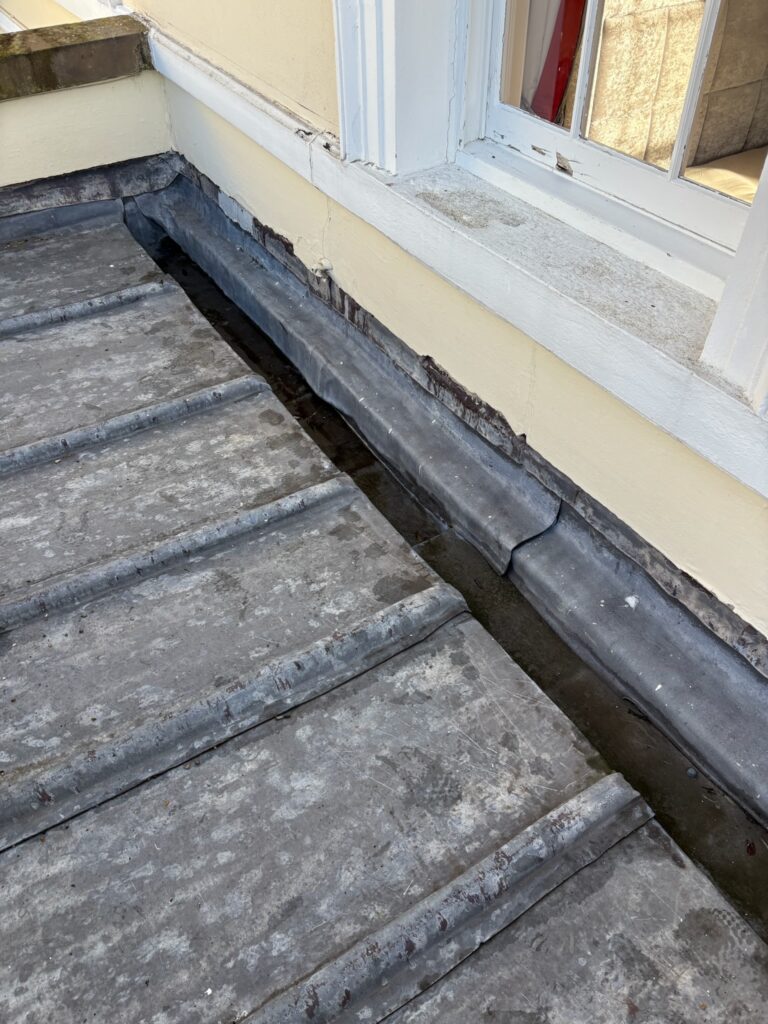
One of the most common lead roof maintenance mistakes is allowing leaves, silt, moss and general debris to build up in gutters, valleys and behind parapets. Lead relies on efficient drainage. When water is allowed to pond, deterioration accelerates.
Common consequences include:
- standing water increasing corrosion risk
- organic matter holding moisture against the lead surface
- ice formation causing stress and deformation
- blocked outlets leading to overflow and damp penetration
Even well-designed roofs suffer reduced lead roof lifespan if debris is not removed periodically. Clearing debris is one of the simplest ways to avoid long-term lead roof maintenance mistakes.
Maintenance Mistake #2: No Seasonal Inspection Regime
Another frequent lead roof maintenance mistake is failing to inspect roofs seasonally. Many defects develop slowly and are easiest to address when caught early.
Seasonal inspection should include:
- checking outlets and overflows before winter
- looking for early signs of cracking or distortion
- confirming fixings and clips remain secure
- ensuring ventilation paths remain open
Without inspection, small issues are left to develop unchecked. This reactive approach is a core reason lead roof maintenance mistakes become expensive repairs rather than minor interventions.
Maintenance Mistake #3: Blocking Ventilation Paths
Ventilation is critical beneath lead roofing, yet blocking airflow is one of the most damaging lead roof maintenance mistakes. Insulation upgrades, repair patches and temporary works can all obstruct ventilation without anyone realising.
Common causes include:
- insulation pushed into ventilation zones
- temporary boarding left in place after works
- sealants or membranes applied across air paths
When airflow is restricted, lead roof maintenance issues quickly escalate into condensation, mould growth and timber decay. These problems often appear internally before any external defect is visible.
For regulatory context on ventilation principles, see Approved Document F guidance.
Maintenance Mistake #4: Inappropriate Cleaning Methods
Cleaning is sometimes carried out with good intentions, yet it can introduce serious lead roof maintenance mistakes. Aggressive cleaning damages the protective patina that forms on lead.
High-risk cleaning practices include:
- abrasive brushing or scraping
- pressure washing
- acidic or chemical cleaners
Once the patina is damaged, the lead surface becomes more vulnerable to corrosion and staining. Correct lead roof maintenance uses gentle methods and avoids unnecessary disturbance.
Maintenance Mistake #5: Delaying Minor Repairs
Small defects are often ignored because they appear insignificant. However, delaying minor repairs is one of the most costly lead roof maintenance mistakes over the lifecycle of a roof.
Minor issues that should be addressed promptly include:
- small splits or cracks beginning to form
- loose flashings or clips
- early signs of distortion
- mortar breakdown adjacent to lead
When left untreated, these issues worsen through thermal cycling and weather exposure, significantly reducing lead roof lifespan.
Maintenance Mistake #6: Uncontrolled Foot Traffic
Lead is soft and easily damaged by concentrated loads. Uncontrolled access is a common but overlooked lead roof maintenance mistake, particularly where roofs are used for servicing plant or access to other elements.
Foot traffic causes:
- indentation and thinning of lead sheets
- creased areas that later crack
- disturbance of fixings and joints
Where access is required, controlled routes should be provided. Without this, even good lead roof maintenance regimes struggle to prevent progressive damage.
Maintenance Mistake #7: Reactive Rather Than Planned Maintenance
Reactive maintenance focuses on fixing visible problems only after failure occurs. This approach underpins many repeated lead roof maintenance mistakes.
Planned maintenance, by contrast, involves:
- regular inspection schedules
- early intervention before failure
- budgeting for preventative works
From a lifecycle perspective, planned lead roof maintenance consistently delivers longer service life and lower overall cost.
How Surveyors Assess Maintenance-Related Deterioration
During inspections, surveyors differentiate maintenance-related defects from design or installation failures by looking at:
- patterns of debris accumulation
- evidence of prolonged standing water
- blocked ventilation zones
- wear consistent with foot traffic
Where multiple lead roof maintenance mistakes are present, surveyors often recommend a combination of cleaning, repair and revised maintenance strategy rather than wholesale replacement.
A Practical Lead Roof Maintenance Schedule
To avoid common lead roof maintenance mistakes, a simple schedule is effective:
- Twice yearly: inspect gutters, outlets and visible leadwork.
- After storms: check for debris, displacement and damage.
- Annually: review ventilation paths and fixings.
- Ongoing: control access and avoid unnecessary cleaning.
Following this approach significantly improves lead roof lifespan and reduces the risk of unexpected failure.
Maintaining a Lead Roof?
Correct maintenance often requires compatible materials and timely repair.
Buy Rolled Lead SheetUse the Lead Code Selector
Conclusion: Maintenance Determines Lead Roof Lifespan
Most premature deterioration is not inevitable — it is the result of avoidable lead roof maintenance mistakes. By understanding how lead behaves, keeping drainage and ventilation clear, controlling access and addressing small issues early, owners and managers can dramatically extend lead roof lifespan.
Maintaining lead roofing correctly is not complex, but it must be deliberate. With a planned approach, lead roofs can continue to perform for decades, delivering exceptional durability and long-term value.