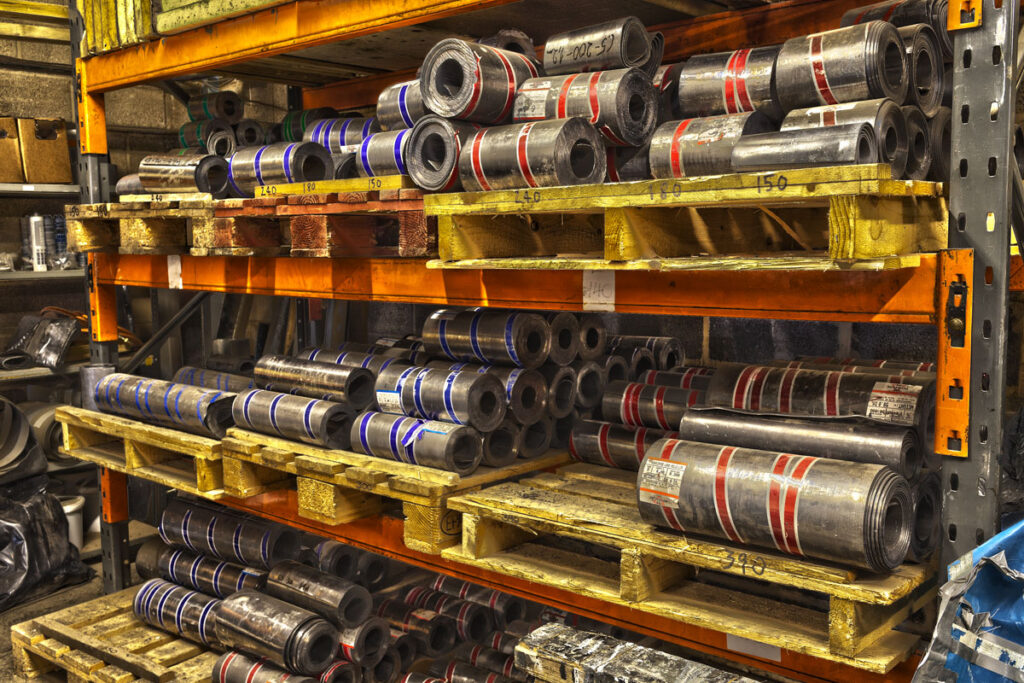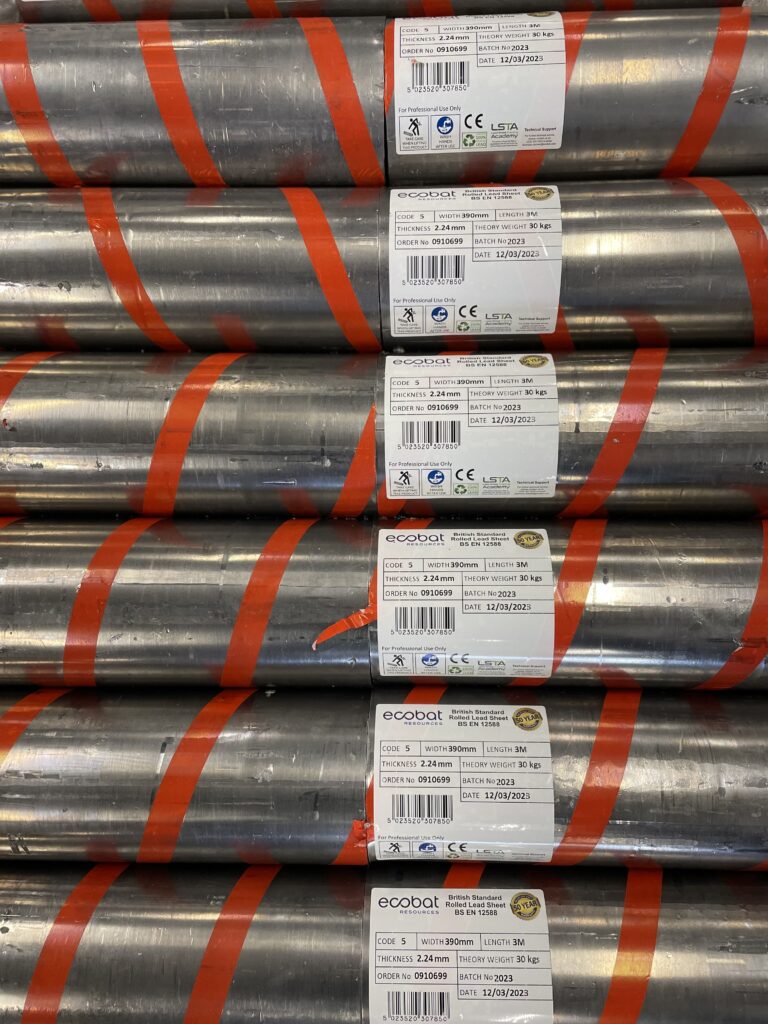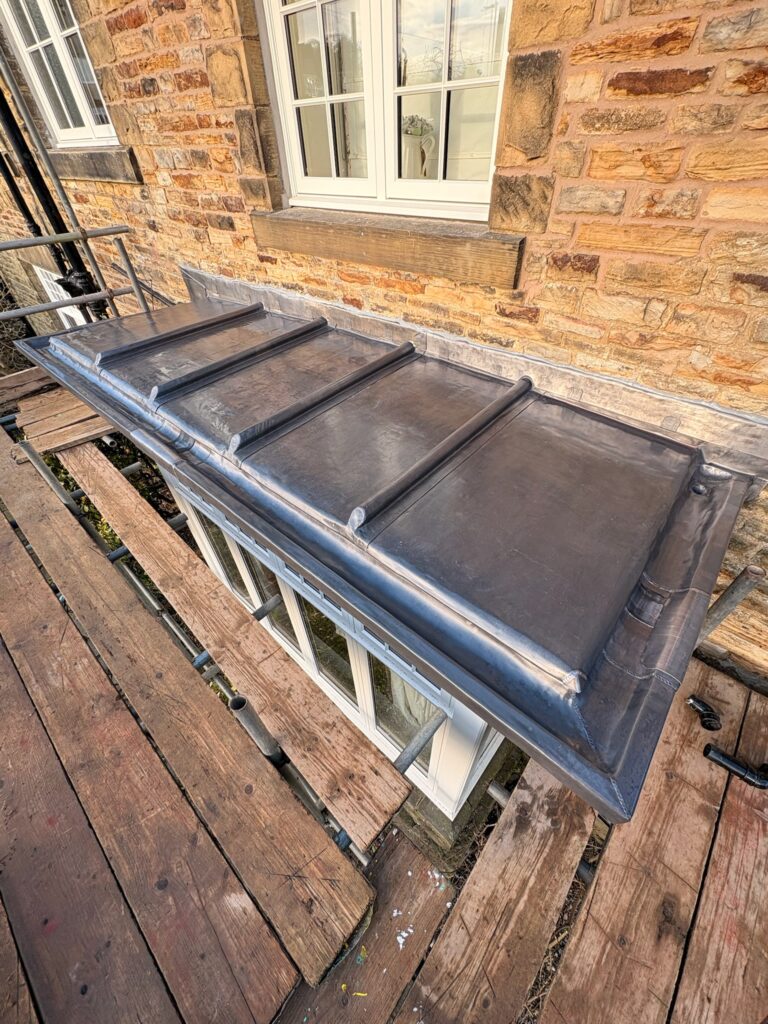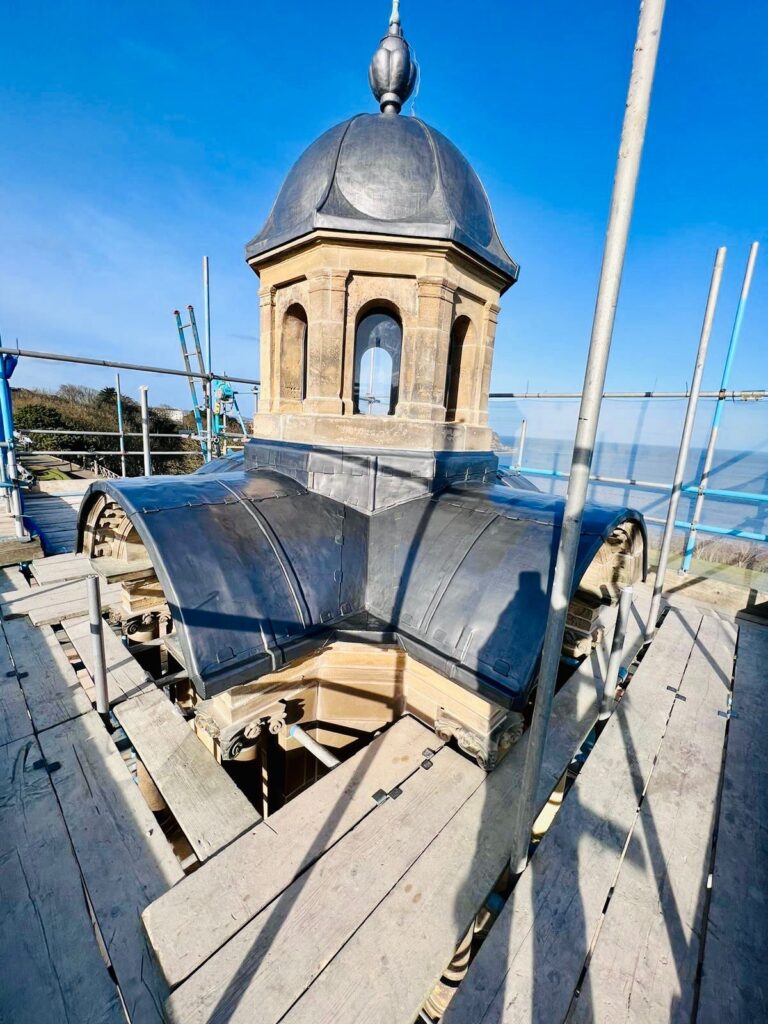


 Code 3 Lead
 Code 4 Lead
 Code 5 Lead
 Code 6 Lead






Observing BS6915 in Leadwork Installations | Oracle


- Why observing BS6915 in leadwork installations matters
- What BS6915 actually governs
- The standards framework (BS6915 + BS6229 + BS5250 + BS7913)
- Material behaviour: why lead “remembers” stress
- Substrate compliance before lead installation
- Moisture control: condensation, ventilation and warm roof logic
- Movement, restraint and geometry (bay sizing)
- Clips, fixings and restraint control
- Defect pathways: what fails, when and why
- BS7913 overlay for conservation and heritage
- Specification language that actually protects you
- QA / inspection checklist (design + site)
- Design → Supply → Install authority chain
- Further reading (Oracle cluster)
- FAQ
Oracle Series · Standards Authority
Observing BS6915 in Leadwork Installations: The Standard That Governs Substrate, Moisture and Movement
Observing BS6915 in leadwork installations is not optional “good practice” — it is the technical foundation that determines whether a rolled lead sheet roof will perform for decades or fail within years. If you only take one principle from this Oracle pillar, take this: lead is a movement-controlled system, and BS6915 is the rulebook that prevents restraint-led fatigue cracking.
In real projects, “lead roof to BS6915” is often specified as a single line item — but the standard governs more than the visible lead sheet. It governs the relationship between support, geometry, movement, and substrate stability. For a practical, continuously updated reference that ties these concepts together (lead codes, bay sizing, joints, fixings and buildability), use the override hub: The Lead Handbook.
Crucially, observing BS6915 in leadwork installations cannot occur in isolation. It must be integrated with:
- BS6229 – flat roof design principles (falls, drainage and detailing logic)
- BS5250 – moisture management and condensation control (warm vs vented strategy)
- BS7913 – conservation of historic buildings (heritage significance and compatible interventions)
What BS6915 Actually Governs
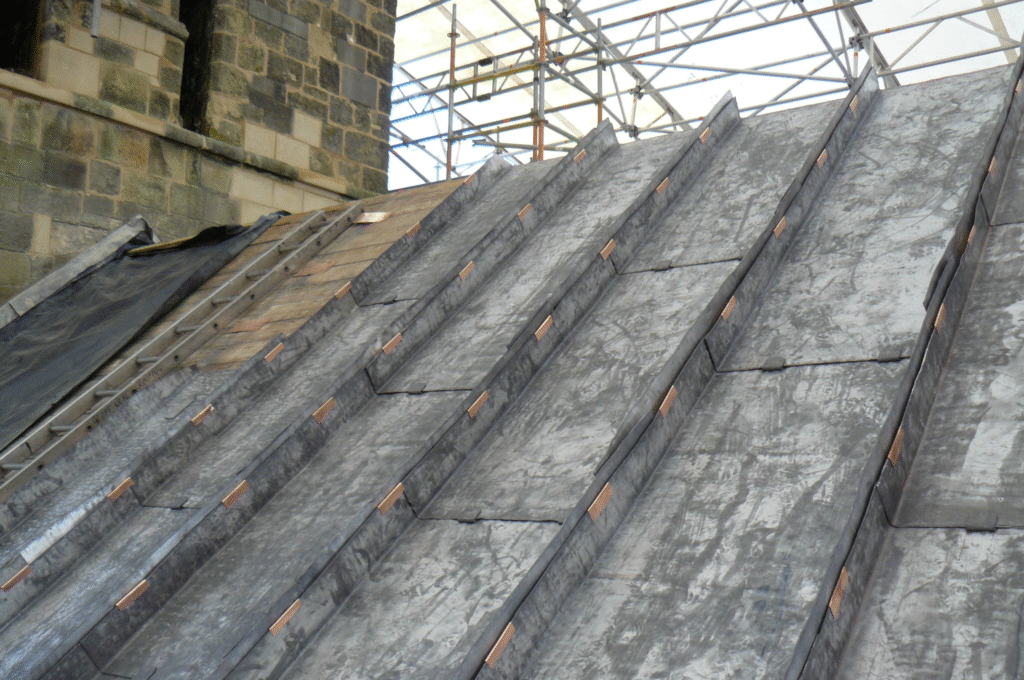
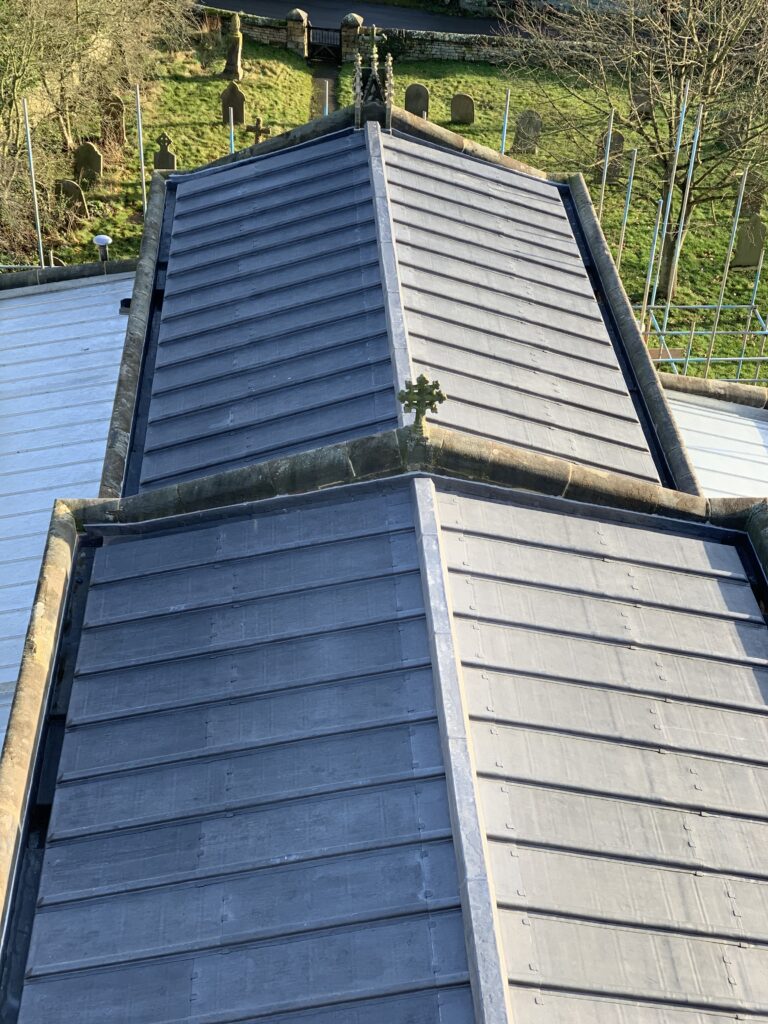
BS6915 is the British Standard for the design and construction of fully supported lead sheet roof and cladding coverings. “Fully supported” is not a throwaway phrase: lead is not a spanning material. If it deflects, it distorts; if it distorts, it ponds; if it ponds, it cycles harder; if it cycles harder, it fatigues and cracks. Observing BS6915 in leadwork installations is therefore about designing out the conditions that create stress.
In practical terms, observing BS6915 in leadwork installations requires:
- Continuous support beneath lead sheet (stable deck, stable build-up, stable junctions)
- Correct bay sizing and joint spacing (movement-led geometry, not aesthetics-led geometry)
- Restraint avoidance at perimeters, abutments and fixings
- Compatible substrate and separation layers (controlled slip, no abrasion, no chemical incompatibility)
- Buildable detailing that survives “real site” conditions (thermal cycles, maintenance access, water loading)
If you want the practical lead-roof interpretation of these principles (with clear “do/don’t” formats), start with Lead Sheet Association manual explained, then use The Lead Handbook as your ongoing specification baseline.
The Standards Framework: BS6915, BS6229 and BS5250 (Plus BS7913 in Heritage)
The most accurate way to think about observing BS6915 in leadwork installations is to treat the roof as a layered control system: water must be shed, moisture must be managed, and movement must be accommodated. Each standard owns a different failure mode.
| Standard | Primary Control | What it prevents (in lead roofs) | What happens when ignored |
|---|---|---|---|
| BS6915 | Fully supported lead sheet + movement | Restraint-led fatigue cracking, joint distress, buckling | Cracks at rolls, splits at edges, oil-canning, repeated repairs |
| BS6229 | Flat roof design + drainage logic | Ponding, water loading, outlet failures, fall errors | Standing water, thermal amplification, joint stress, leak claims |
| BS5250 | Moisture + condensation risk management | Hidden timber decay, corrosion of fixings, mould, “leak-like” staining | Wet decks beneath intact lead; failures misdiagnosed as rain ingress |
| BS7913 | Conservation principles | Loss of significance, incompatible “modernisation” harm | Breathability conflicts, irreversible interventions, consent problems |
Material Behaviour: Why Lead “Remembers” Stress
Lead is unusually forgiving in the hands of a skilled installer, but it is unforgiving when restrained over time. This is why observing BS6915 in leadwork installations is not just “joinery”; it is material behaviour engineering. For a deeper explanation of why rolled lead behaves the way it does, see The Constitution of the Metal.
The key idea is cumulative fatigue. Every thermal cycle is a movement event. If movement is allowed, the system relaxes. If movement is restrained (oversized bays, over-fixing, rigid edges), stress accumulates at predictable points: roll edges, fixings, junctions, and areas of differential temperature.
This is why “thicker lead” is not a solution by itself. Thickness changes stiffness and handling, but does not remove movement. Bay sizing and joint spacing remain the controlling variables — and are governed by movement-led principles. A practical bay sizing reference is here: Correct lead bay sizes.
Substrate Compliance Before Installing Lead Sheet
A lead roof is only as stable as the deck beneath it. Before any sheet is laid, substrate compliance must be verified as an engineered system. The deck must be stable in three different ways: structurally, hygrothermally, and geometrically. Observing BS6915 in leadwork installations without this substrate validation is effectively “installing a movement system onto an unstable platform”.
1) Structural stability (BS6915 + BS6229)
- Deck rigidity: deflection leads to ponding and stress concentration.
- Continuity: no abrupt steps or discontinuities beneath bay fields.
- Falls and outlets: confirm the drainage logic is coherent and buildable (BS6229 principle).
2) Moisture stability (BS5250)
- Define the strategy: warm roof, vented roof, or explicitly designed hybrid (do not leave to “site interpretation”).
- Airtightness continuity: seal penetrations at the airtightness line, not only at the lead surface.
- Drying potential: avoid “moisture traps” with no designed drying route.
3) Geometric stability (movement + junction control)
- Set bay geometry early: bay sizes must be designed around the roof geometry, not “fit in later”.
- Coordinate kerbs and edges: rooflights and parapets should not create hidden restraint points.
- Allow buildability: if a detail cannot be built consistently, it cannot be compliant consistently.
For the most common ways substrate strategy fails (and how to avoid design-led defects), this Oracle companion is useful: Lead roof design errors (2026).
Moisture Control: Condensation, Ventilation and Warm Roof Logic (BS5250)
Lead is effectively vapour-tight. That single fact explains why moisture failures beneath lead roofs are so persistent — and why they are frequently misdiagnosed. In many investigations, staining appears “leak-like” yet does not correlate with rainfall. The mechanism is often condensation caused by air leakage, cold bridging, or trapped moisture.
Observing BS6915 in leadwork installations must therefore be paired with a coherent BS5250 moisture strategy. That strategy usually resolves into one of two approaches:
- Vented substrate strategy: a ventilation void removes moisture; performance depends on continuous airflow paths remaining unobstructed.
- Warm substrate strategy: insulation arrangement keeps the deck warmer, reducing condensation risk; performance depends on airtightness and vapour control continuity.
For the dedicated technical anchor on how to ventilate lead roofs correctly (and where vented roofs typically fail), use: Lead roof ventilation.
Movement, Restraint and Geometry (Bay Sizing)
Movement is the governing principle behind observing BS6915 in leadwork installations. Bay sizes, lap geometry, joint spacing, and fixing zones are not stylistic preferences — they are engineered responses to thermal expansion and contraction.
The fastest route to fatigue cracking is to combine:
- Oversized bays (too long or too wide for the code/application)
- Over-fixing (excessive restraint through the sheet field)
- Rigid perimeters (locked edges, kerbs, parapets with no allowance for slip)
This is why bay sizing must be treated as a design variable that is declared on drawings and schedules, not guessed on site. If you want the practical bay sizing reference that your spec team can use immediately, link (and use) this: Correct lead bay sizes. For the consolidated “all in one” reference, keep the override hub visible: The Lead Handbook.
Design-led rule set (simple, enforceable)
- Declare bay sizes (length and width) as design outputs, not contractor choices.
- Declare joint type and joint spacing as part of the movement strategy.
- Detail perimeters so the lead can move without stress concentration.
- Coordinate kerbs/outlets so they do not create hidden restraint points.
Clips, Fixings and Restraint Control
Fixings are where theory becomes failure — because the difference between “secure” and “restrained” is often just a few additional nails, a poorly positioned clip line, or a detail that locks the lead into the substrate.
Observing BS6915 in leadwork installations requires a fixing strategy that secures lead without converting movement into stress. Clip spacing, clip type, fixing zone placement and interface details must be consistent with the movement system. Use this dedicated reference (and link it from this section on every related Oracle post): Lead clips and fixings.
Defect Pathways: What Fails, When and Why
Surveyor diagnosis of lead roof defects is rarely about “spotting a hole”. It is about understanding which control system failed: water shedding (BS6229), moisture strategy (BS5250), or movement control (BS6915). Many repair scopes fail because they treat symptoms (re-lay lead) without correcting causes (substrate or strategy).
Failure pathway 1: fatigue cracking (design-led)
- Mechanism: restrained movement creates cyclic stress at predictable points (rolls, joints, fixings).
- Evidence: cracks aligned with movement directions, repeating at similar bay positions.
- Root causes: oversized bays; rigid perimeters; over-fixing; poor joint geometry.
- Best linked companion: Correct lead bay sizes.
Failure pathway 2: “leaks” that are actually condensation
- Mechanism: warm moist air leaks into cold zones and condenses beneath vapour-tight lead.
- Evidence: staining independent of rainfall; mould/odour; corrosion at fixings; wet deck under intact lead.
- Root causes: ambiguous moisture strategy; blocked ventilation voids; discontinuous airtightness line; cold bridging at kerbs/parapets.
- Best linked companion: Lead roof ventilation.
Failure pathway 3: ponding + accelerated stress (falls/drainage)
- Mechanism: standing water increases thermal amplitude and loading, stressing joints and bays.
- Evidence: persistent ponding; silt lines; joint distress near outlets; accelerated wear at low points.
- Root causes: falls not achieved in deck build-up; outlet design errors; deflection under load.
- Best linked companion: Lead roof design errors (2026).
Failure pathway 4: maintenance-triggered damage (avoidable)
Even a compliant roof can be damaged by poor maintenance: blocked outlets, abrasive cleaning, untrained access, or “quick fixes” that introduce restraint points. If you want a clear client-facing guide that reduces callouts and preserves performance, link this near your conclusion: Lead roof maintenance mistakes.
BS7913: Conservation Overlay for Heritage Leadwork
In historic buildings, observing BS6915 in leadwork installations must be interpreted through the lens of conservation principles. BS7913 prioritises minimum intervention, material compatibility, and retention of significance. That can change how you approach moisture strategy upgrades, deck replacement decisions, and junction modifications.
Conservation-led projects commonly involve:
- Irregular geometry and non-standard junctions
- Historic substrates that perform differently to modern deck assemblies
- Limited appetite for raising levels or introducing visually disruptive ventilation
- Higher scrutiny on reversibility and fabric loss
The conservation risk is not “using modern standards” — it is applying modern moisture strategies without understanding historic fabric behaviour. A typical example is sealing a roof build-up too tightly without preserving drying routes, then triggering hidden decay beneath intact lead. This is why moisture strategy links belong even in conservation sections: Lead roof ventilation.
Specification Language That Actually Protects You
Most “lead roof to BS6915” clauses are too thin to be enforceable. The best specs are explicit: they declare the moisture strategy, declare bay geometry, declare fixing philosophy, and declare the controlling guidance documents. This is how you avoid design drift and procurement drift.
Rolled lead sheet roof coverings shall be designed and installed as fully supported leadwork with movement-led bay sizing and joint detailing, in accordance with BS6915 principles. The roof substrate shall be designed as an integrated system including falls and drainage strategy consistent with BS6229 principles and moisture/condensation risk strategy consistent with BS5250 principles. The chosen moisture strategy shall be explicitly defined as either a warm roof or a vented substrate approach, with continuity shown in plan and section at perimeters, kerbs, outlets and penetrations. Bay sizes, joint spacing and restraint strategy (including clip/fixing zones) shall be declared on drawings and schedules, not left to site interpretation. Guidance shall be cross-checked against industry detailing references including the Lead Sheet Association manual principles and the project’s Lead Handbook guidance notes.
Practical spec support links (embed these in your spec notes / drawings pack): The Lead Handbook · Lead clips and fixings · Correct lead bay sizes.
QA / Inspection Checklist (Design + Site)
Design-stage checks
- Is the roof explicitly defined as warm, vented, or a modelled hybrid (no ambiguity)?
- Are falls and outlets designed and buildable (drainage logic)?
- Are bay sizes and joint spacing declared (not implied)?
- Are perimeters and kerbs detailed to avoid restraint points?
- Is the fixing strategy aligned with movement control? (see lead clips and fixings)
- Are the “common traps” explicitly avoided? (see lead roof design errors)
Site-stage checks
- Deck is flat, continuous, rigid and fully supportive (no soft zones, no steps under bays).
- Falls verified before lead is laid (do not “hope” the lead will fix ponding).
- Ventilation voids are unobstructed (if vented) and protected from future insulation creep.
- Airtightness line is sealed at penetrations (below), not just “flashed over” above.
- Clips/fixings align with the movement strategy (no over-fixing through sheet field).
- Photo record junctions before closure (outlets, kerbs, parapets, penetrations).
Design → Supply → Install Authority Chain
Observing BS6915 in leadwork installations is easier when procurement and execution align with the intended specification. This is where your Oracle cluster becomes commercially powerful: the reader can learn, specify, buy, and execute — all on one platform.
- Technical procurement: The Lead Lads Shop
- Override guidance hub: The Lead Handbook
- Specialist installation services: The Lead Lads
- Heritage technical authority: GNR Leadwork
Shop Lead Sheet — for spec-aligned lead codes, accessories and consumables.
Further Reading: Oracle Cluster (Internal Linking Spine)
- The Lead Handbook (override hub: codes, bay sizes, joints, fixings, detailing rules)
- Lead Sheet Association manual explained (why the rules exist)
- The Constitution of the Metal (material behaviour and stress memory)
- Lead roof ventilation (vented vs warm strategy, condensation control)
- Correct lead bay sizes (movement-led geometry)
- Lead clips and fixings (restraint control)
- Lead roof design errors (2026) (recurring failure patterns)
- Lead roof maintenance mistakes (how good roofs get ruined)
FAQ: Observing BS6915 in Leadwork Installations
1) What does observing BS6915 in leadwork installations actually control?
It controls movement-led design of fully supported lead sheet coverings: bay geometry, joint spacing, restraint avoidance, and the relationship between the substrate and the lead sheet.
2) Why is BS6229 relevant if BS6915 already exists?
Because BS6229 principles govern falls and drainage logic. If water is not reliably shed, ponding amplifies thermal cycling and loads, accelerating joint stress and increasing defect risk.
3) Why is BS5250 relevant to lead roofs?
Lead is vapour-tight. If moisture strategy is wrong, condensation can saturate the deck beneath intact lead. Many “leaks” are moisture/air leakage issues; see lead roof ventilation.
4) What is the most common design error that breaks BS6915 principles?
Oversized bays and hidden restraint points. Bay sizes must be movement-led; see correct lead bay sizes.
5) How do clips and fixings cause lead failure?
Over-fixing converts movement into stress. Clips and fixing zones must secure without restraining; see lead clips and fixings.
6) How should this all be “kept current” as guidance evolves?
Use The Lead Handbook as the override hub that consolidates and updates code selection, bay sizing, joints and practical detailing rules.
Observing BS6915 in Leadwork Installations: The 60-Second Recap
If you are specifying or inspecting rolled lead sheet work, treat observing BS6915 in leadwork installations as the controlling rule set that protects the roof from fatigue cracking, restraint stress and avoidable defects. Observing BS6915 in leadwork installations is not just about “lead on a roof” — it is about ensuring the lead is fully supported, correctly jointed, and allowed to move in a predictable way over a stable substrate.
In practice, observing BS6915 in leadwork installations means you declare bay geometry, joint strategy and restraint control on drawings and schedules, then you verify that the deck and moisture strategy will keep the support dry, rigid and stable. Where teams treat observing BS6915 in leadwork installations as a one-line note, the roof is forced into stress conditions and failure becomes predictable.
The “Non-Negotiables” Checklist for Observing BS6915 in Leadwork Installations
- Fully supported lead: no spanning, no soft zones, no unstable deck interfaces.
- Movement-led geometry: bay sizes and joint spacing declared (not guessed) to support observing BS6915 in leadwork installations.
- Restraint avoidance: perimeters, kerbs, penetrations and outlets detailed so movement is not locked in.
- Moisture strategy: warm or vented approach explicitly defined so observing BS6915 in leadwork installations is meaningful over time.
- Fixing discipline: clips and fixings selected and positioned to secure without over-fixing.
For day-to-day detailing and updates that keep observing BS6915 in leadwork installations consistent across projects, use the override hub: The Lead Handbook.
Oracle Series #1 Ultimate Lead Sheet Resource
observing BS6915 in leadwork installations aligned with the rest of the Oracle Series, link these supporting anchors wherever their topics appear in your spec notes, method statements and inspection reports:
- Primary override hub: The Lead Handbook (codes, bay sizes, joints, fixings, detailing rules that support observing BS6915 in leadwork installations)
- Material behaviour: The Constitution of the Metal (why thermal cycling makes observing BS6915 in leadwork installations essential)
- Ventilation & condensation: Lead roof ventilation (BS5250 logic that protects the substrate beneath fully supported lead)
- Design-led failures: Lead roof design errors (2026) (recurring mistakes that break observing BS6915 in leadwork installations)
- Movement geometry: Correct lead bay sizes (bay sizing that turns observing BS6915 in leadwork installations into buildable geometry)
- Maintenance risks: Lead roof maintenance mistakes (how good roofs fail in service even when observing BS6915 in leadwork installations was achieved)
- Authority baseline: Lead Sheet Association manual explained (why the rules exist and why observing BS6915 in leadwork installations aligns with accepted practice)
- Restraint control: Lead clips and fixings (fixing discipline that prevents over-restraint and protects observing BS6915 in leadwork installations)
Buy, Specify, Install (Keep The Chain Unbroken)
The best way to protect observing BS6915 in leadwork installations from design drift and procurement drift is to align the delivery chain: buy through The Lead Lads Shop, execute with The Lead Lads, and for heritage technical delivery and large-format authority see GNR Leadwork.
Final reminder: observing BS6915 in leadwork installations is a system decision — substrate, moisture and movement must be designed together.